PLEASE NOTE
This site is under construction. I am adding to it as fast as I can, but for a while information will be limited as I struggle to get everything posted. The “Contact Us” form works, so if you’d like to send me a message and ask a question in the meantime, I’d love to hear from you! Please bear with me as I work on adding to the site, and check back frequently for new updates!
Introduction
Crystal Models
In the list below you will find photos and information describing wood crystal models I have made. Please enjoy scrolling though and reading about what I’ve done so far, and check back often to see what’s new! To learn about the models themselves and how they’re made, please see About The Models. If you’re interested in purchasing one, or if you have questions or suggestions for future models, please contact me here.
An Odd Garnet Model
Based on a specimen from Yekaterinburg, Russia
This model is based on a very unusual but completely natural specimen, and there is a story behind it as well.
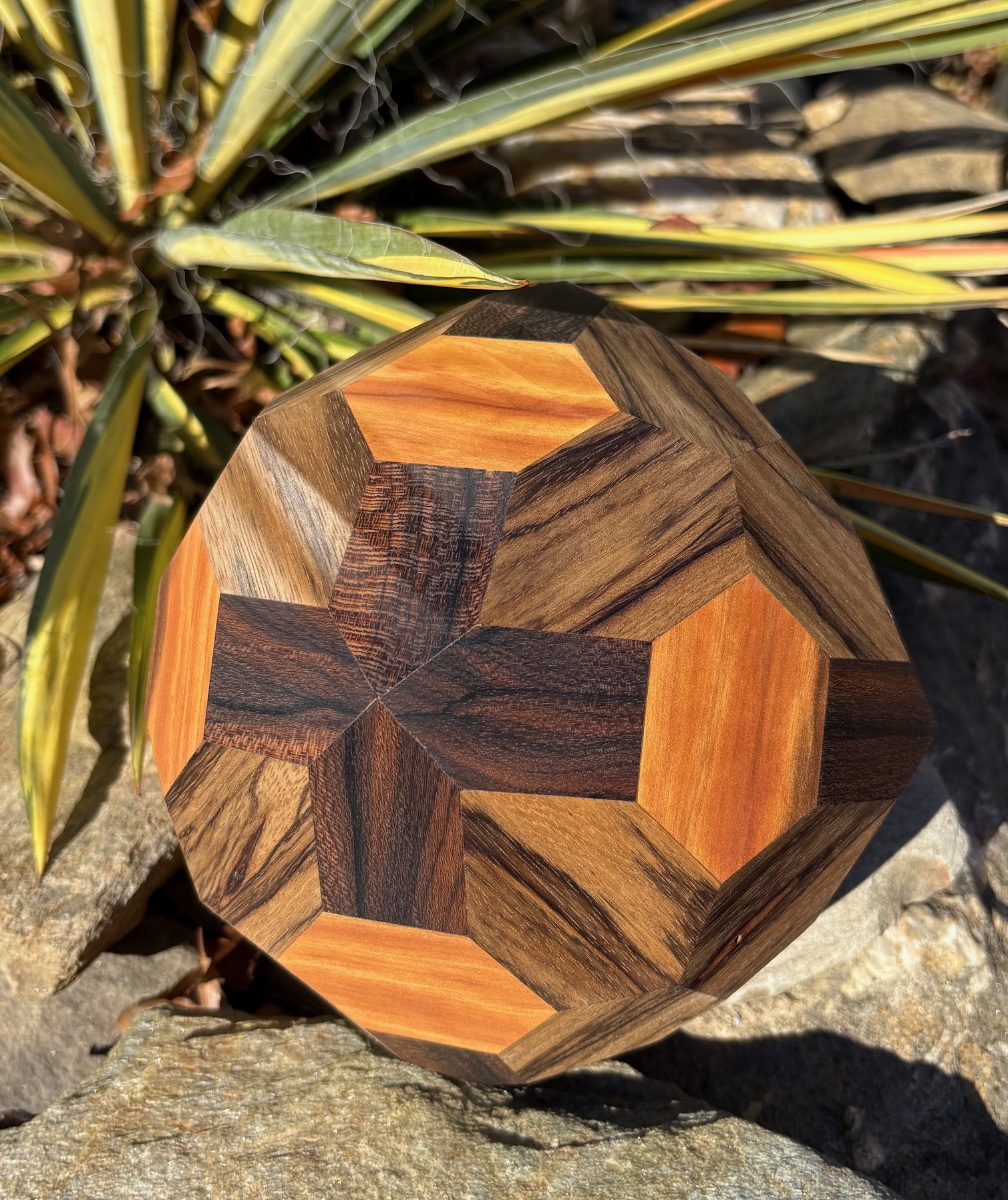
Most of the time, I model specimens that are in my personal collection. I’m not strict about this rule, but having a guideline in place prevents me from being distracted by all the gorgeous crystal drawings out there, and keeps me from spending all my time modeling beautiful rarities that I’m not likely to see in person. But just this once, I allowed myself to be persuaded by the incredible form of John White’s “Odd Garnet” described in the March/April 2025 issue of Rocks and Minerals magazine.
Quartz - Dauphine twin
Based on a specimen from Uri, Switzerland
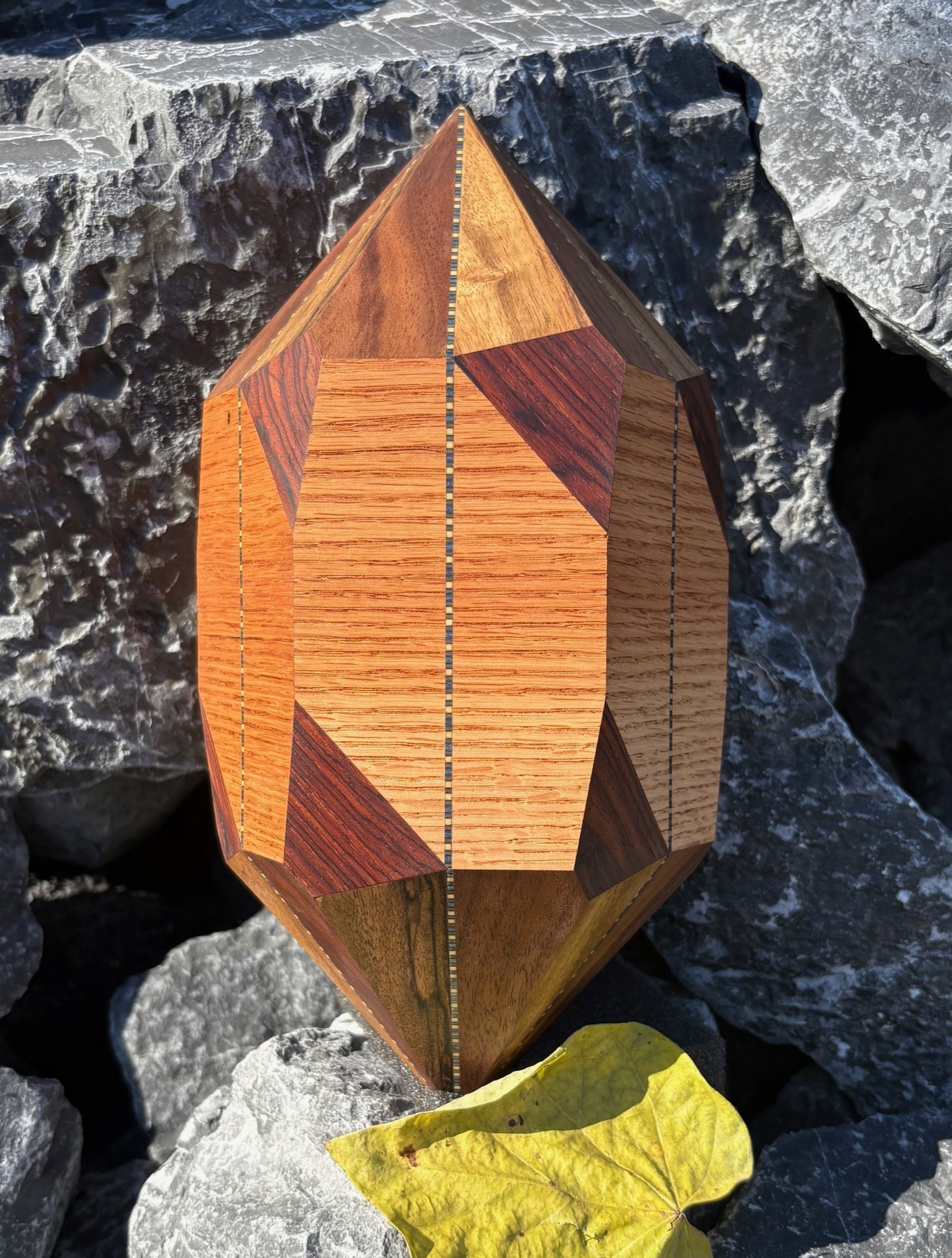
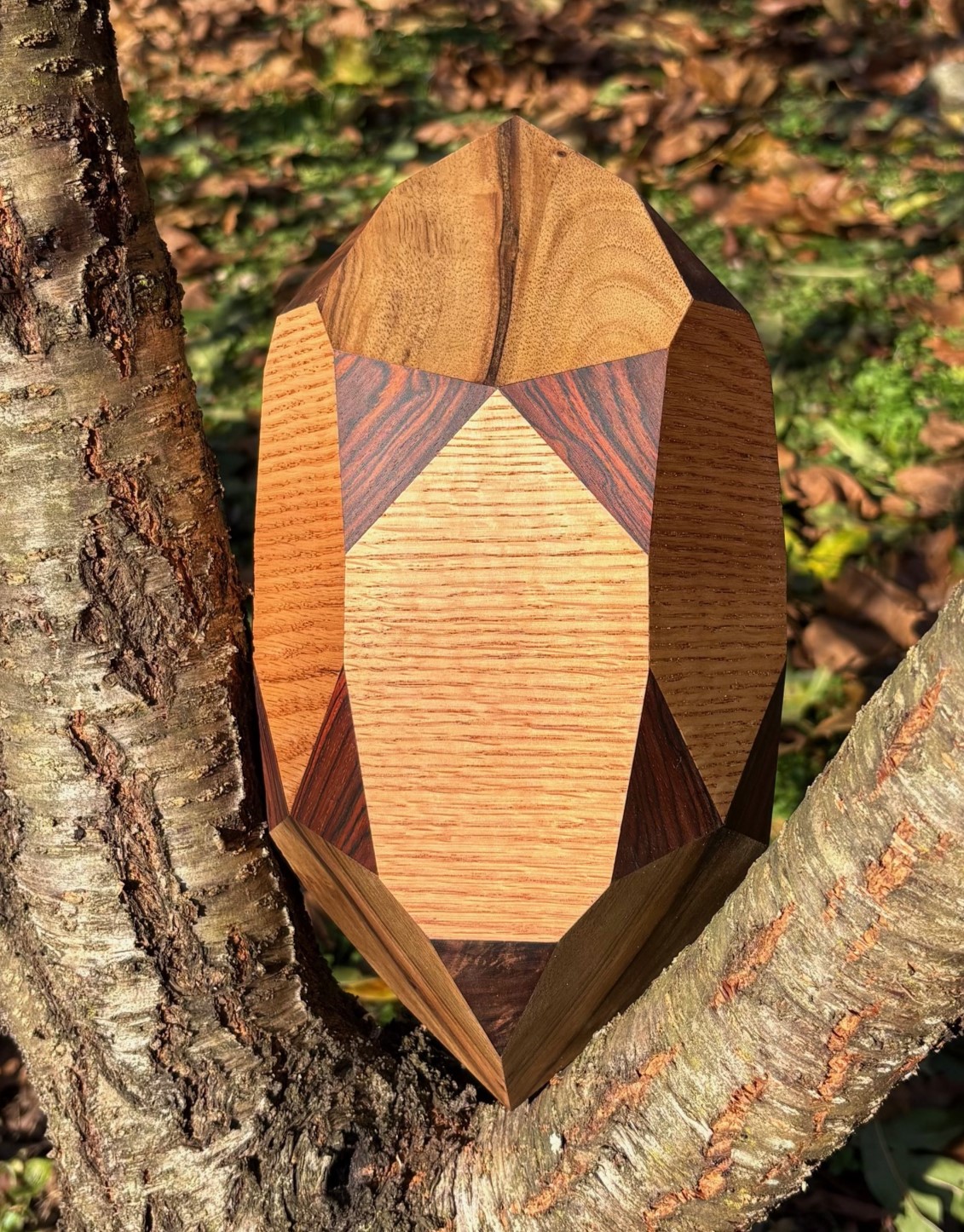
The Dauphine twin law is a parallel axis twin combining either two left or two right handed quartz crystals. Quartz is commonly twinned according to the Dauphine twin law, but specimens exhibiting ideal form are less common than might be expected. Faces that would reveal twinning are not always expressed, and twin boundaries are often irregular and hard to see. That means in a crystal whose faces don’t reveal its handedness, twinned regions with seamless boundaries can pass unnoticed. (Models of quartz crystals whose handedness can be determined are shown here)
Quartz - Brazil twin
Based on a specimen from Canton of Graubunden, Switzerland
The Brazil twin law is a parallel axis twin found in quartz, combining a right and a left handed individual. Ideal drawings of a fully developed, symmetrically twinned crystal are often found in textbooks, and make for some really lovely diagrams (see below for one of them). Unfortunately, actual crystals with these faces are extremely rare, but it’s possible that I have one in my collection. More about that below, but first here’s a wood model representing the ideal form, depicted in fig. 455 from Dana’s A Textbook of Mineralogy, 4th ed., edited by W. E. Ford.
Pyrite - Iron Cross Twin
Based on a specimen from Gachala, Cundinamarca Dept., Colombia.
One of the most recognizable crystal drawings in any mineralogy textbook is the diagram of the pyrite iron cross twin. It’s a penetration twin of two pyritohedra, and their interaction creates the distinctive cross-shaped pattern where the edges of the two pyritohedra intersect at 90 degrees. Below is a drawing from a crystallography textbook, with the model I made next to it.
Achtaragdite Handbag - Positive and Negative Tristetrahedron
Based on a specimen from Akhtaragda River, Russia
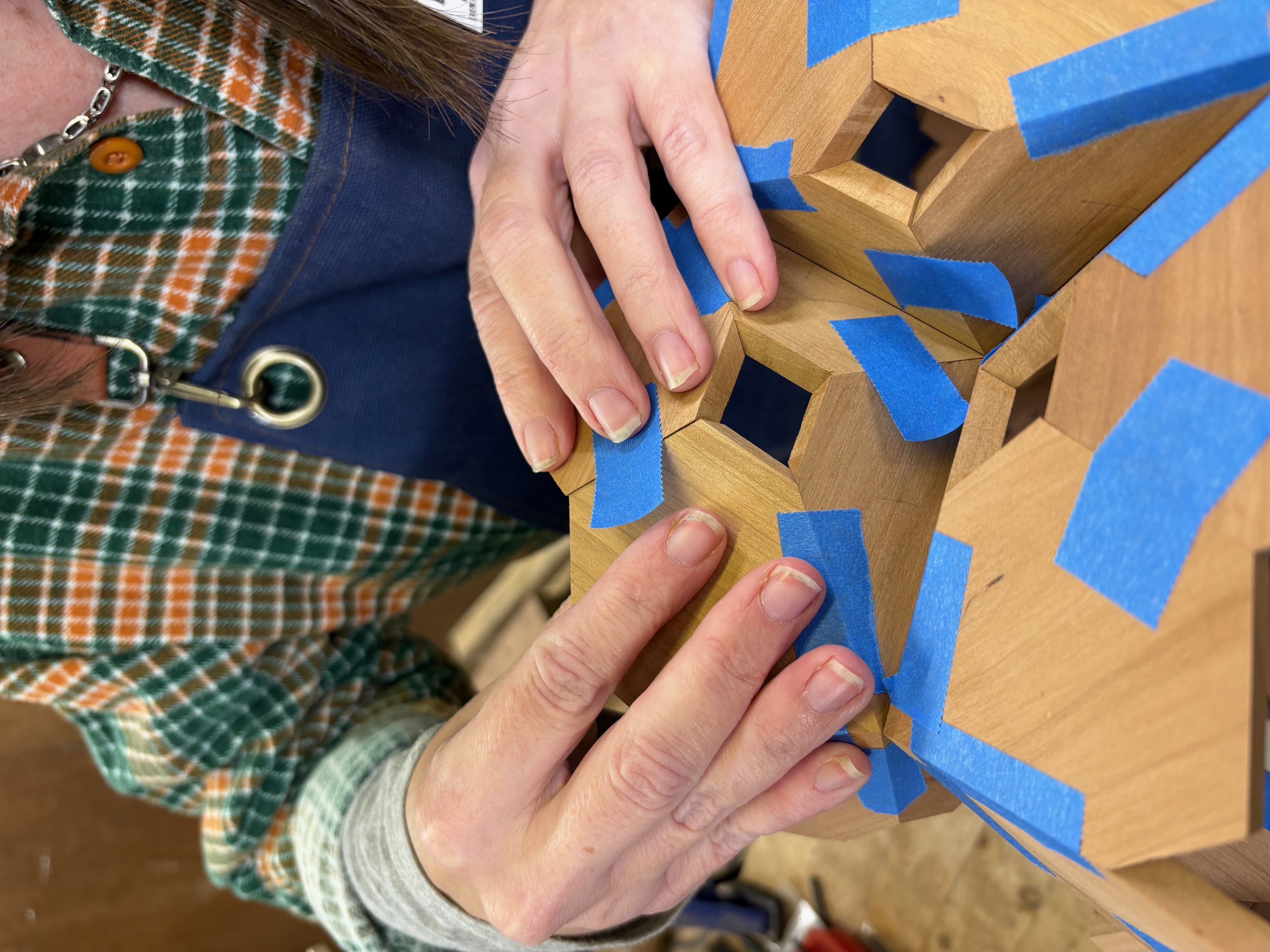
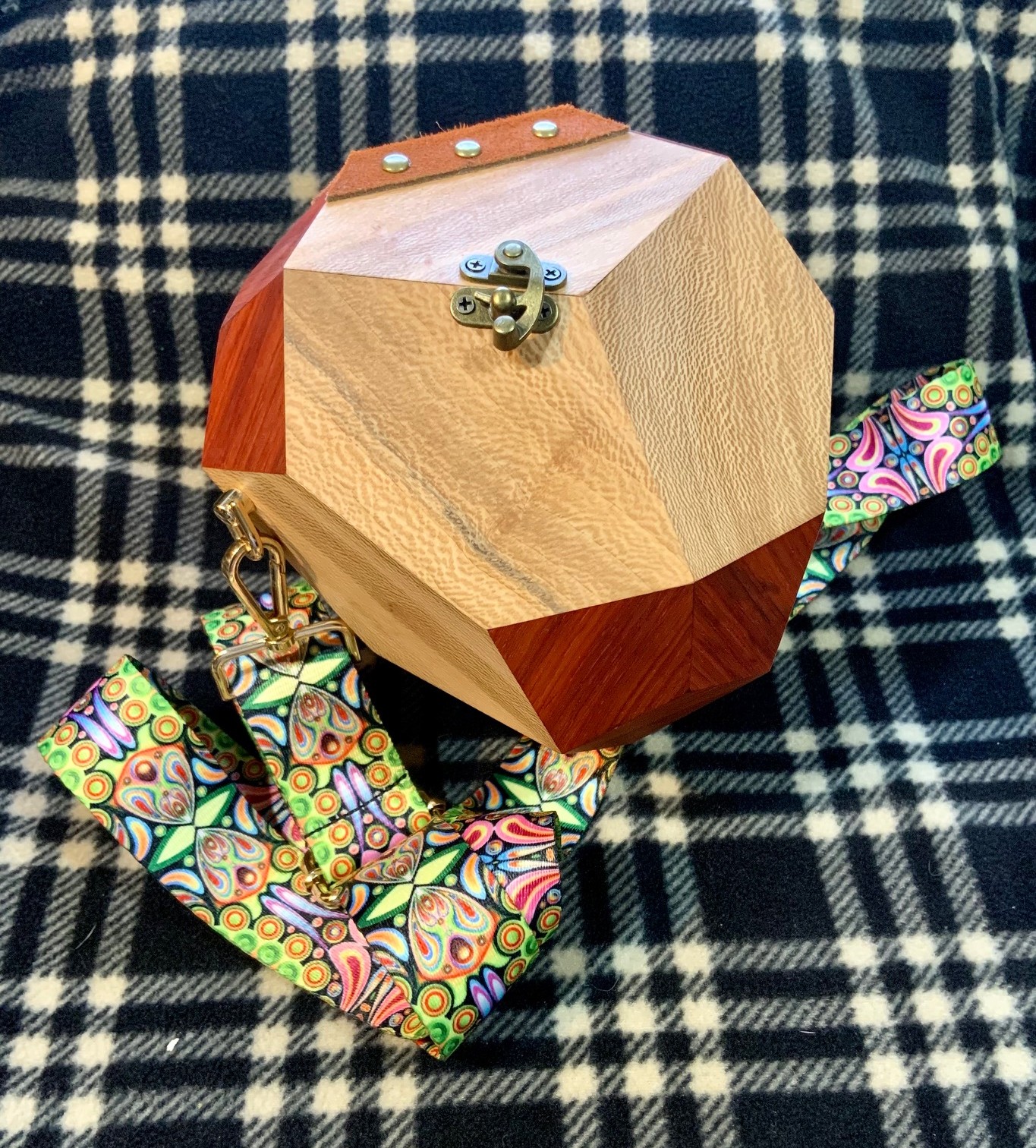
I had a good idea a few years ago as we were getting ready to go to the Tucson Gem and Mineral Show. I had just started making crystal models, and was looking for an easy way to let other collectors know what I was doing. Wouldn’t it be nice, I thought, to make a crystal model handbag and take it to the Tucson show as a conversation starter? The shape of the model I was currently planning seemed perfect for a handbag, and I could just imagine how great it would turn out! The problem was that I didn’t have much experience making models yet. I was still in the slow and careful stage, and I knew I didn’t have enough time left before our departure to finish a handbag.
Bixbyite with Braunite Lamellae
Based on a specimen from Thomas Range, UT
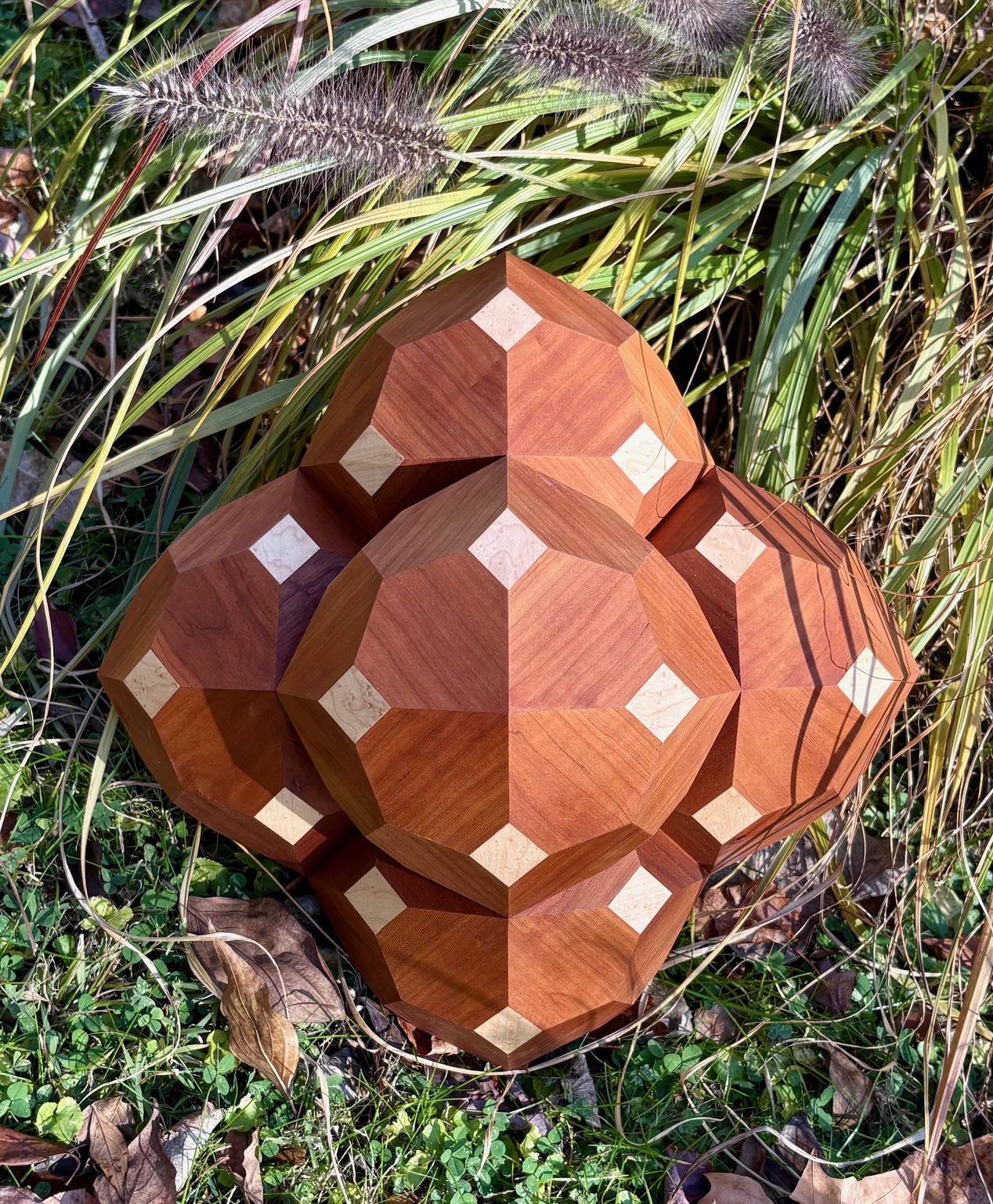
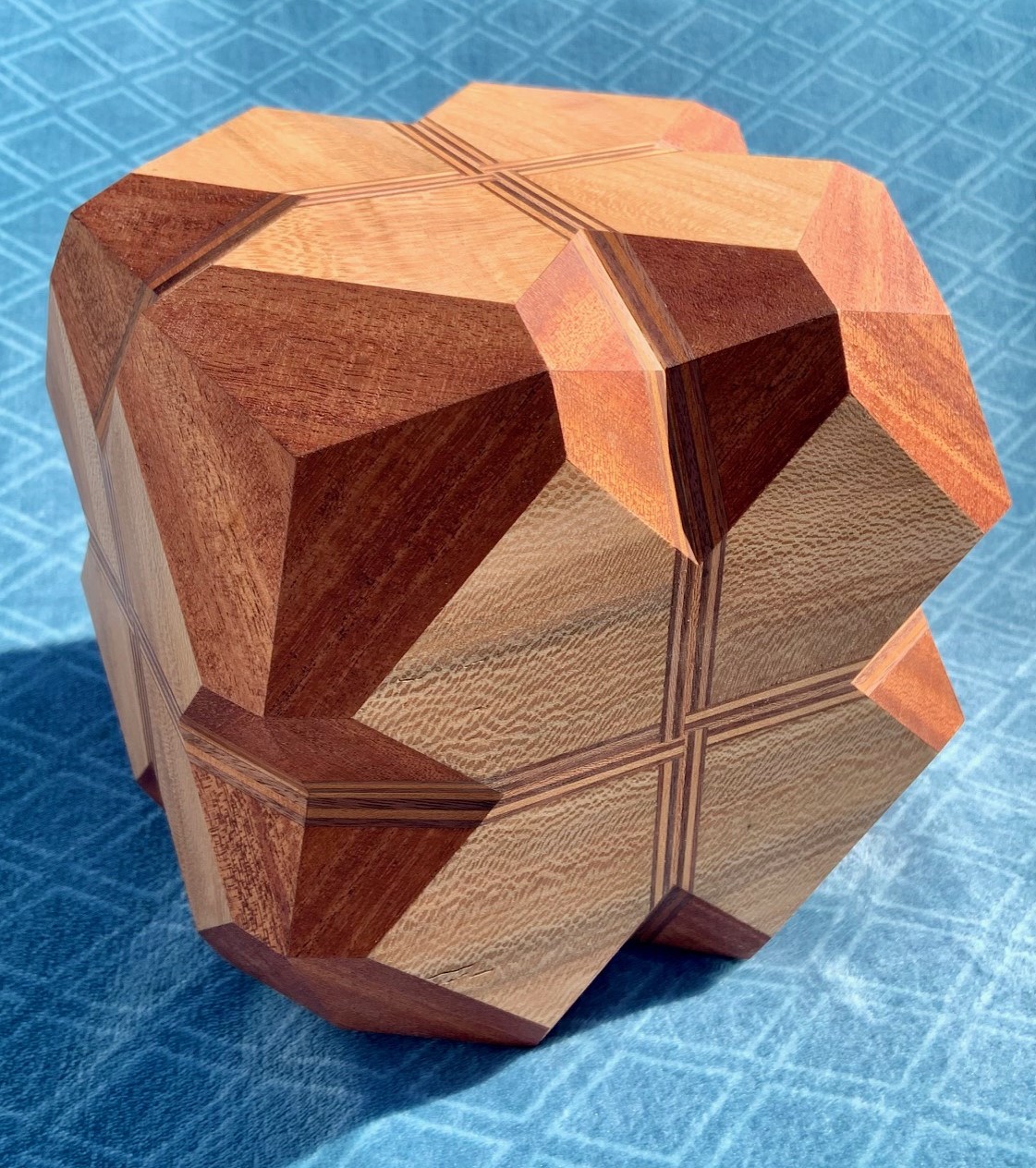
This model was inspired by a beautifully symmetric but tiny crystal of bixbyite. There are little concavities along the edges of the main crystal, as well as the expected trapezohedral corner modifications. A little investigating convinced me that the faces that made up the concave regions were also trapezohedron faces, but what were they doing in the centers of cube edges, and why were they so nicely symmetrical? And what, if anything, did they have to do with the striations that crossed in the center of every cube face?
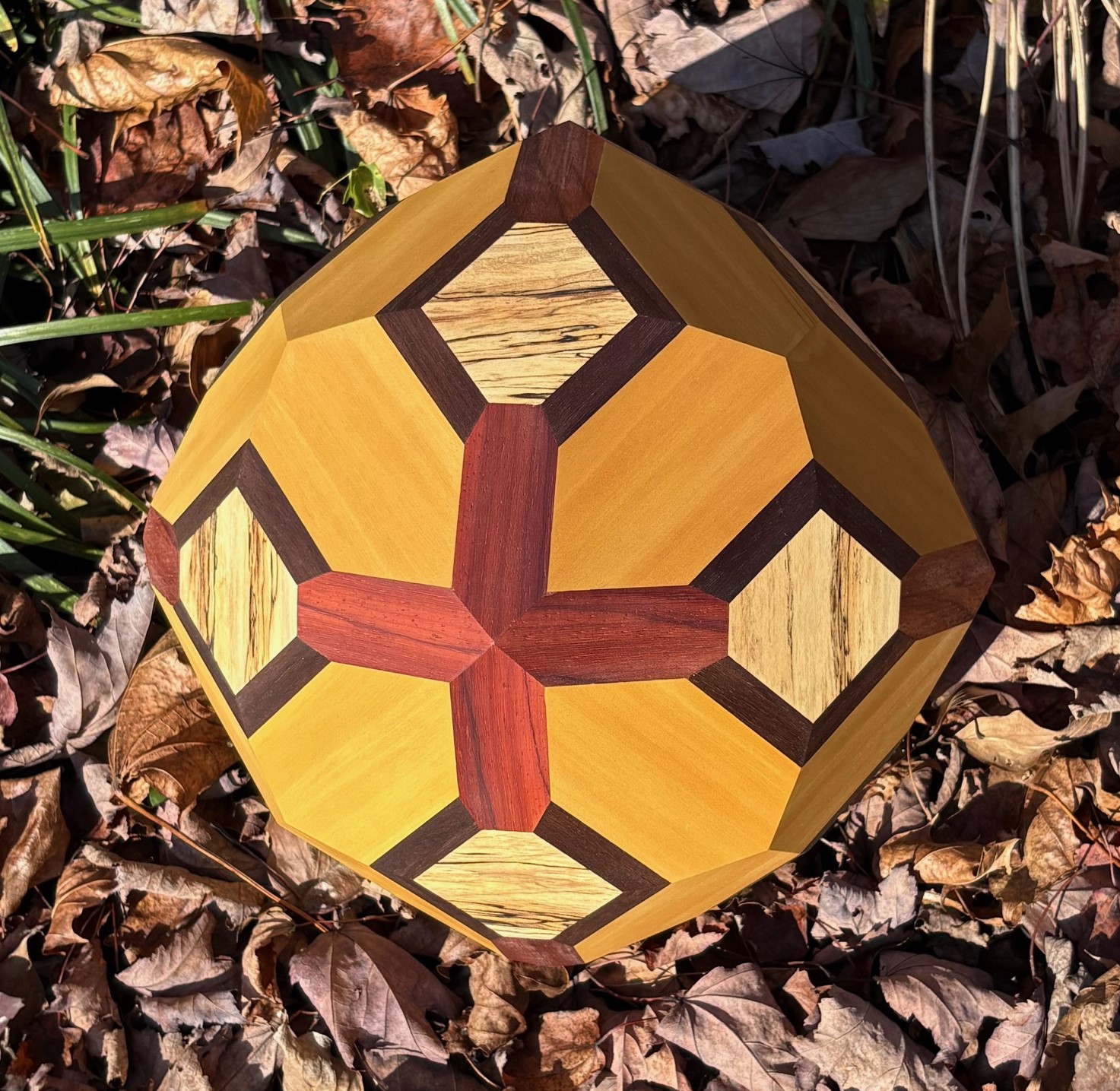
Complex tsavorite garnet
Large complex tsavorite garnet model based on a specimen from Merelani Hills, Tanzania
I bought the crystal fragment this model is based on at the Tucson show in 2022. It’s about the size of my thumbnail, and around half complete. While it’s a pretty shade of green, it’s not gemmy, and certainly not undamaged. According to objective standards, it’s not a great specimen, and not the type of crystal most collectors are looking for, but I dug through about 6 flats of “better” specimens to find it. What attracted me to this specimen was its complex and interesting crystal habit. But, as you can see in the photo, it’s difficult to see all the faces clearly and tell how they are arranged, so I made an idealized CAD model to better represent what the crystal would have looked like if it had developed symmetrically.
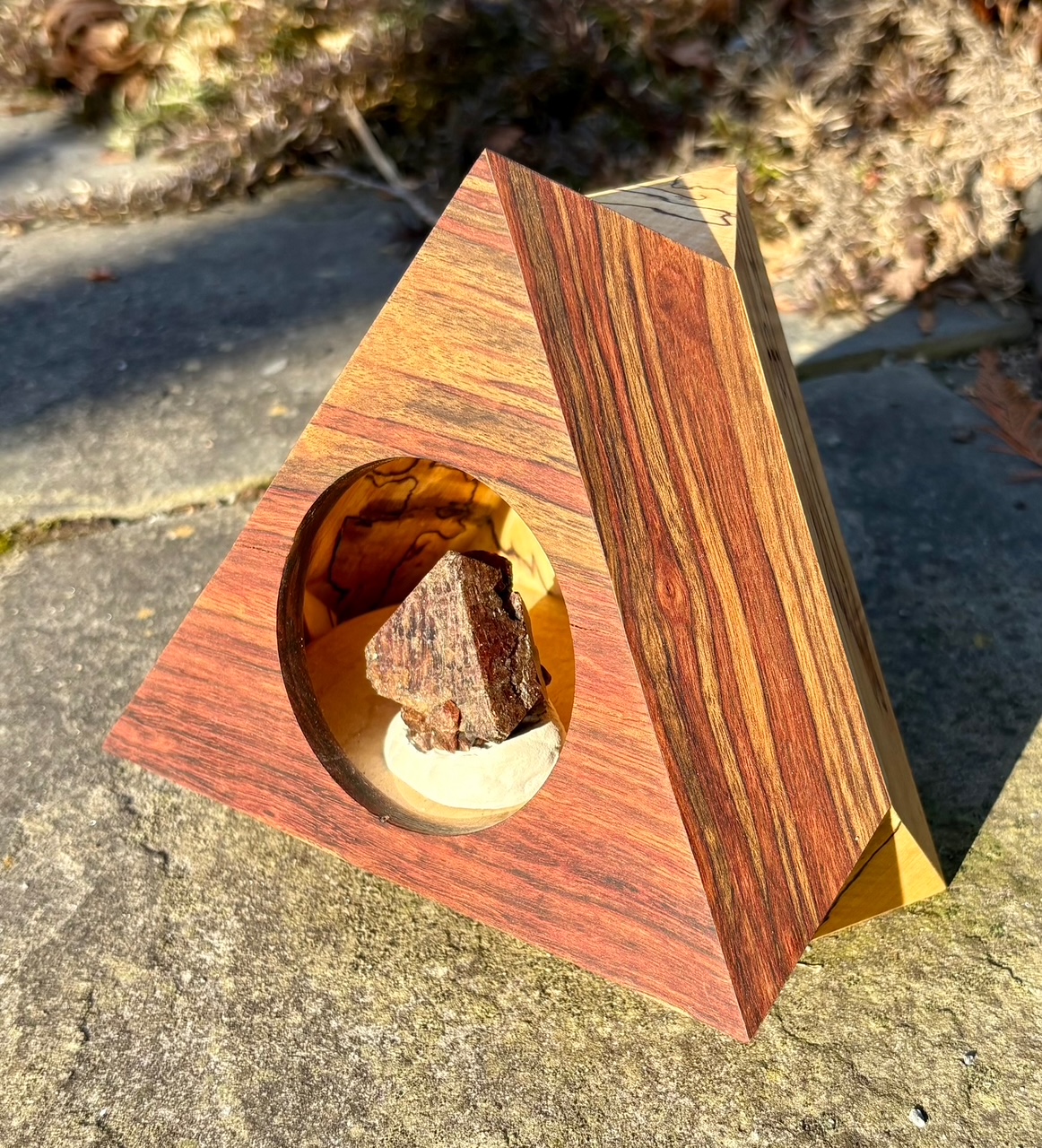
Spinel - Spinel Law Twin Display
Based on a specimen from Luc Yen Mine, Yen Bai Province, Vietnam.
I love the idea of displaying a mineral inside a box or case that’s a matching crystal model. It seems like a perfect way to show off a specimen with particularly good form, and present an impressive or surprising specimen in a unique way. This twinned spinel specimen isn’t perfectly smooth or gemmy like some smaller crystals in my collection, but its large size made it the perfect candidate for a custom display.
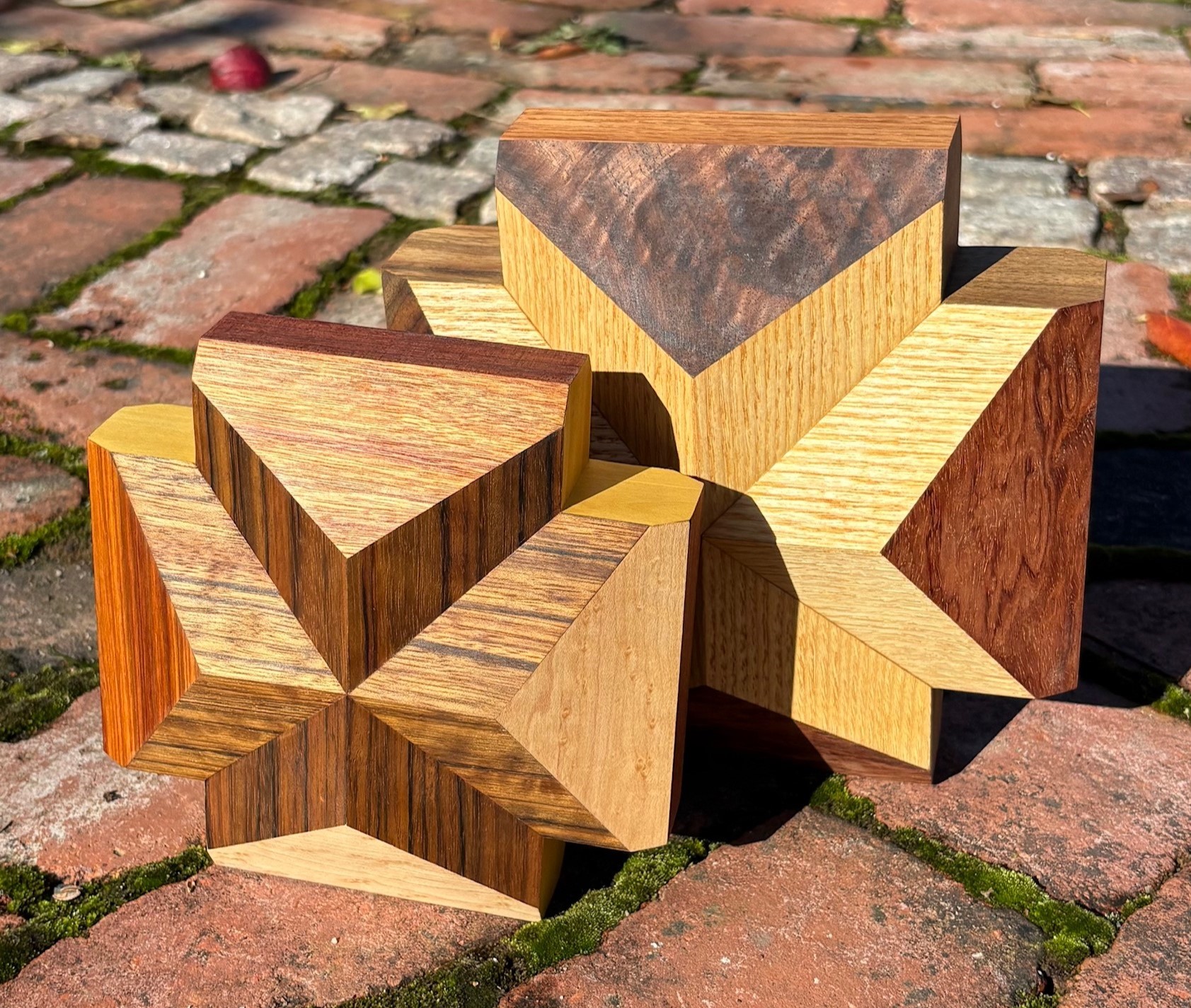
Staurolite Fairy Cross Twin
Based on a specimen from Semiostrovie (Sevev Islands), Russia.
When I was a kid, every attraction with any kind of geologic connection (museums, national parks, commercial caves) had a basket of staurolite fairy crosses for sale in the gift shop. Some of them were probably fakes, some of them were “improved” by a little judicious carving, and some of them had cheap findings glued to one end to turn them into pendants. I never bothered to buy one back then, because they seemed cheesy and incredibly common. Lately however, a well formed fairy cross is a little harder to come by. I’m keeping my eye out at mineral shows for a specimen that more closely resembles the form of the crosses I remember from my childhood, but this one from Russia will do nicely for now.
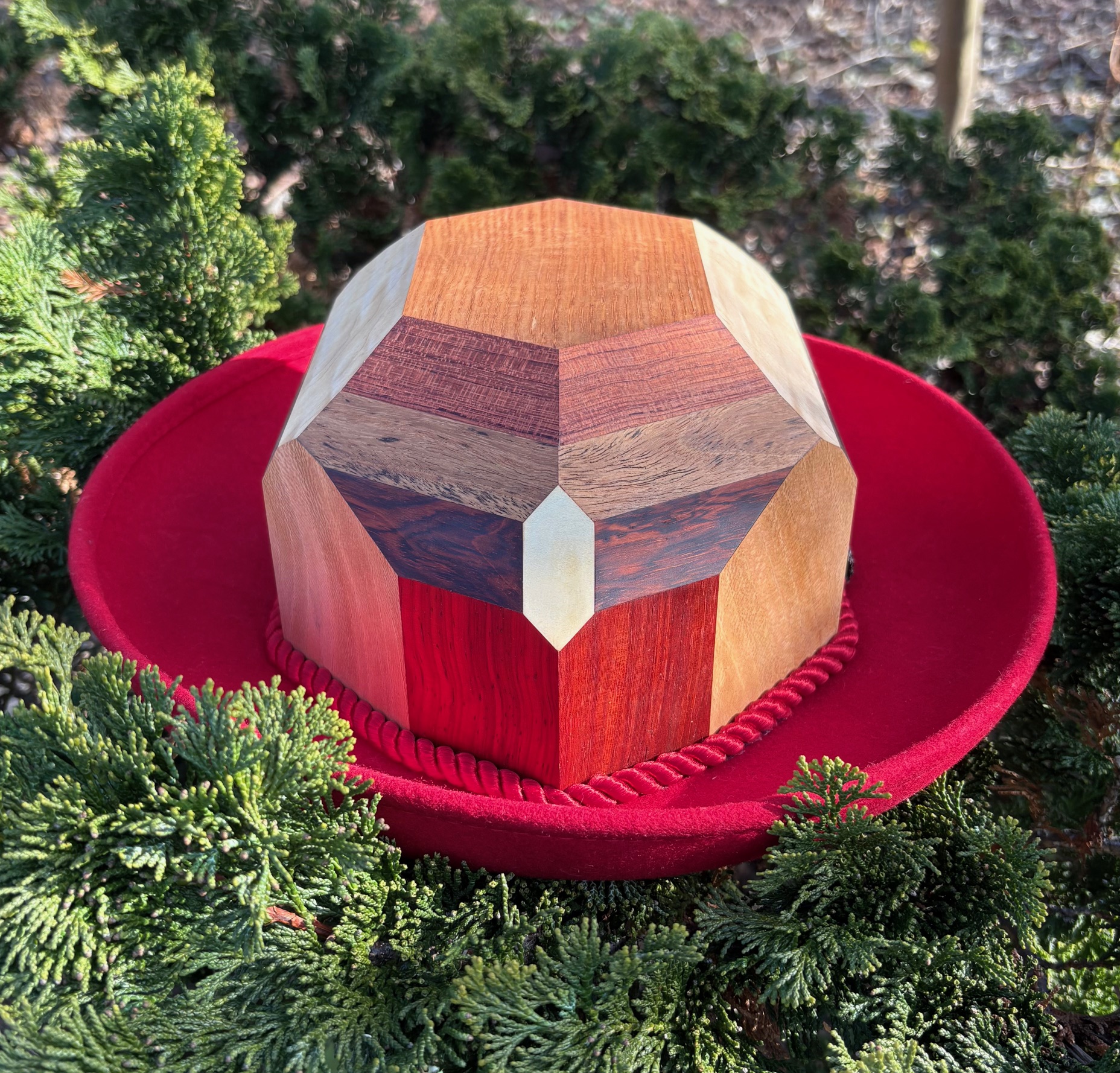
Topaz - Wooden model mounted on a hat
Based on a specimen from Shigar Valley, Pakistan.
I’ve been going to mineral shows with my achtaragdite crystal model handbag for a while now, and it’s been a reliable conversation starter every time. (If you haven’t read about my crystal model handbag yet, you can do so here.) People really seem to love the idea of wearable crystal model art, and after a little while I thought maybe the world needed another example - perhaps a hat this time! I went through my collection looking for a crystal with the correct proportions and the right level of complexity, eventually settling on a perfectly transparent little topaz from Pakistan.

Cumengite crystals - epitaxial over boleite
Based on a specimen from Amelia Mine, Boleo Dist., Baja California Sur, Mexico
This is one of the iconic shapes in mineralogy - highly symmetrical epitaxial overgrowths of cumengite over boleite. Although my specimen is tiny, its form is good, and finding it was all the encouragement I needed to get started on a model. This was the first model I attempted with nonconvex regions, and I was surprised by how well it worked out. Gluing these models together accurately is difficult, and sanding inside the concave areas is worse yet. But some of the most interesting crystals out there have concave areas, so developing a technique to represent them was clearly necessary!
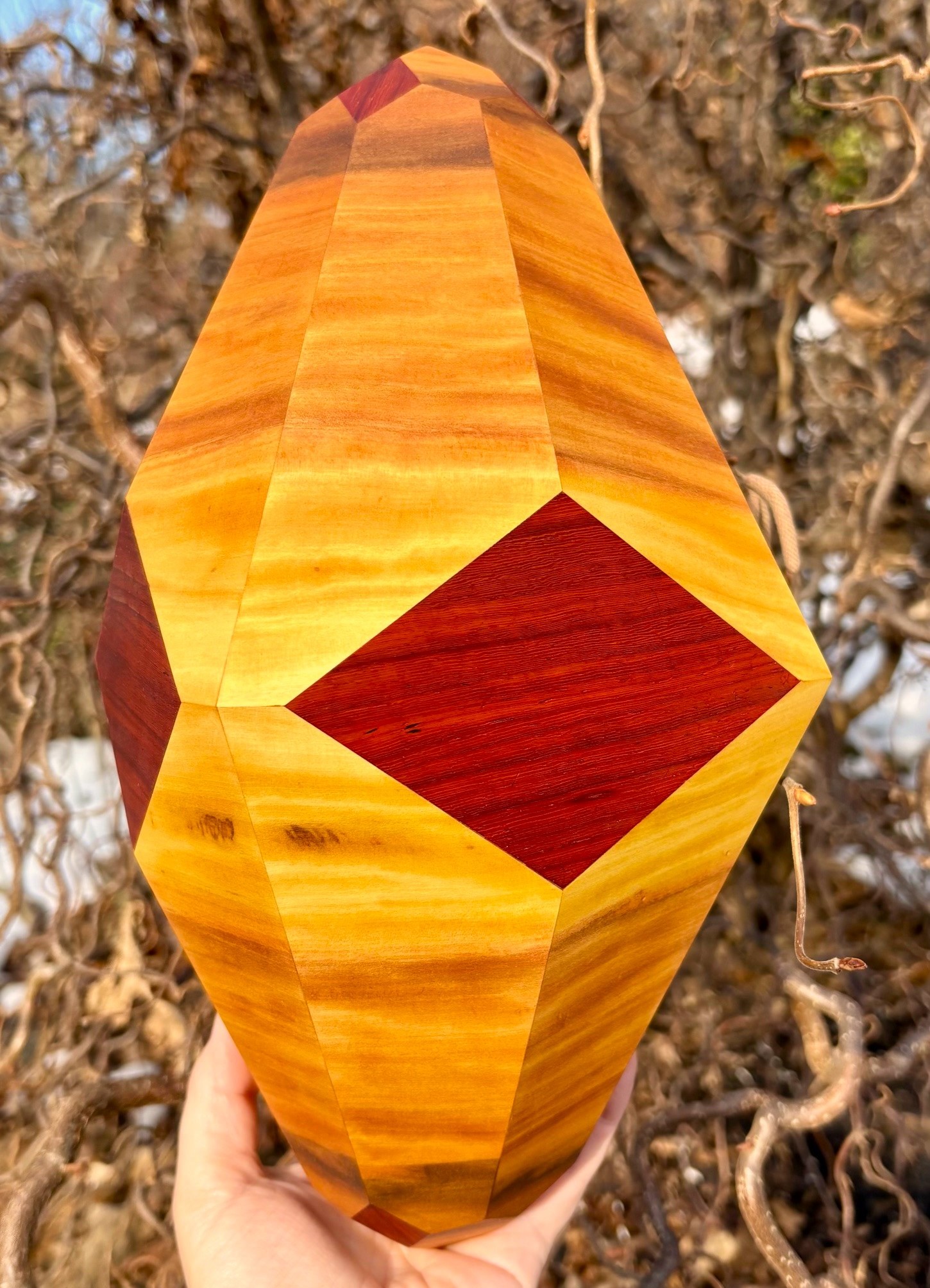
Garnet var. Grossular - Elongated Crystals
Based on a specimen from Turin, Piedmont, Italy.
Surprisingly, some of the most unique crystals I have modeled have been garnets. The odd garnet described here and the complex tsavorite shown here are examples. This is another. The garnet crystal that this model is based on is elongated along one of its fourfold axes, making it look tetragonal instead of isometric. It really doesn’t look much like a garnet at all, and it took a little while for me to convince myself that that’s what it was!
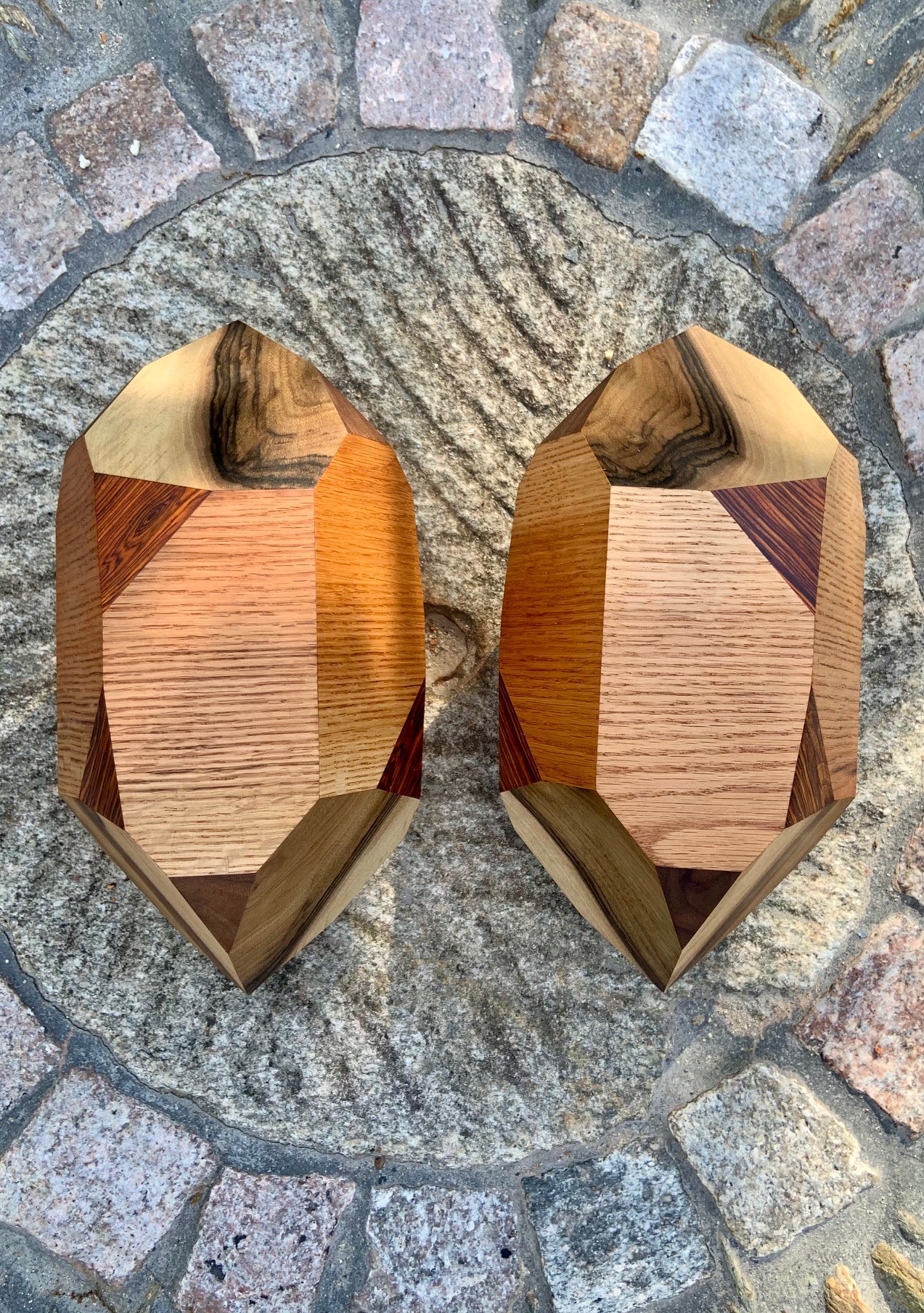
Quartz - Right and Left Handed
Based on a specimen from Uri, Switzerland
I have spent a lot of time over the years digging through bins of cheap quartz crystals looking for right and left handed examples. After a lot of searching, I have a number of each, but most of those crystals are only singly terminated, damaged, or without a location. When I started making models, I decided I was in the market for a better specimen, and happened across this beautiful left handed doubly terminated crystal with textbook form at a show a few years ago. The models shown below are based on this specimen.
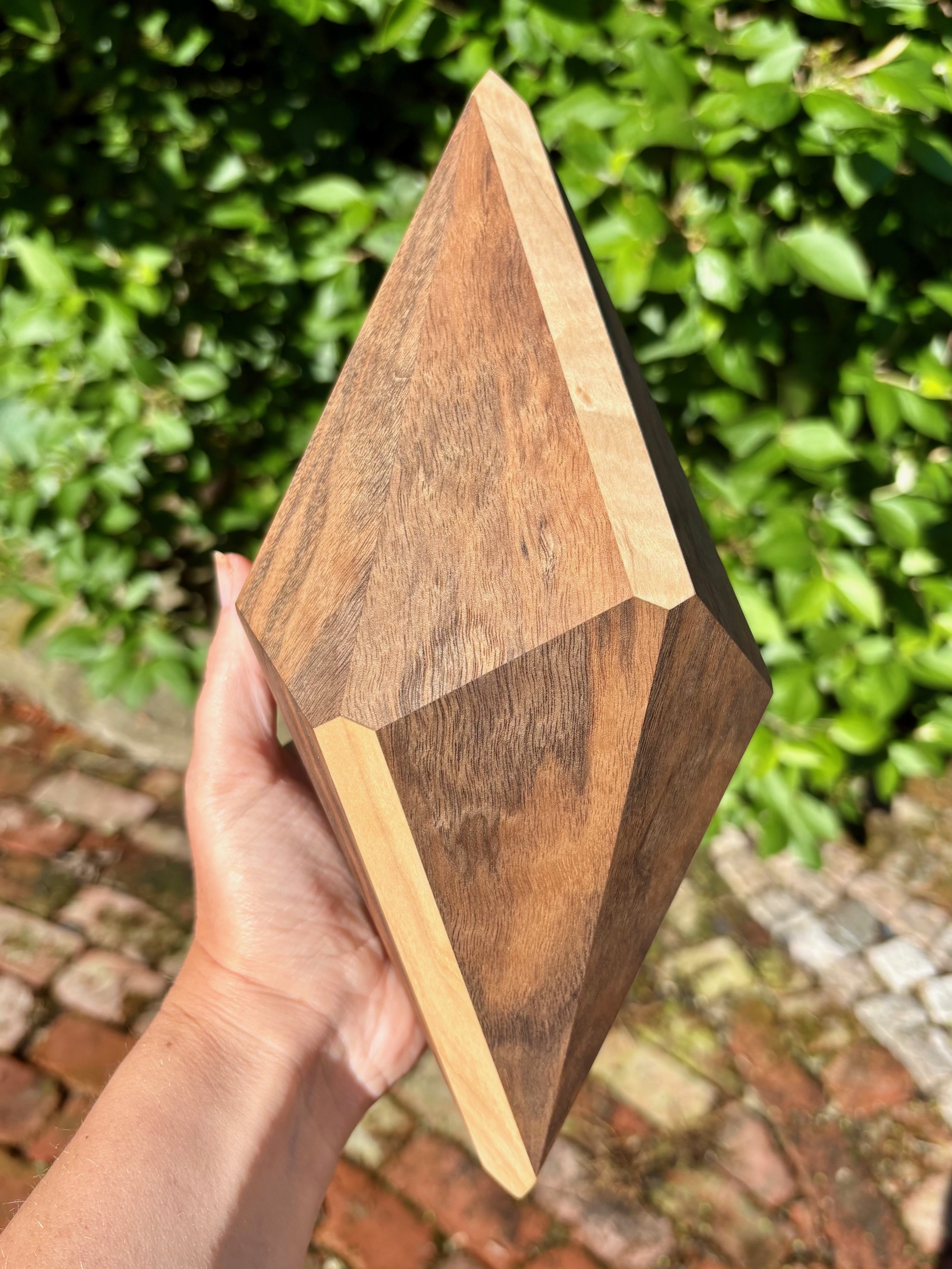
Calcite - Scalenohedron with Rhombohedron Faces
Based on a specimen from Joplin, MO
The calcite crystal this model is based on has an attractive combination of forms, with the added bonus of a sharp orange phantom inside. On the surface, the faces of the rhombohedron {02.1} bevel the edges of the scalenohedron {21.1}, while the phantom appears to be the scalenohedron alone. This model shows only the surface forms, although I am contemplating the future construction of a glass or plexiglass model with a visible phantom model suspended inside.
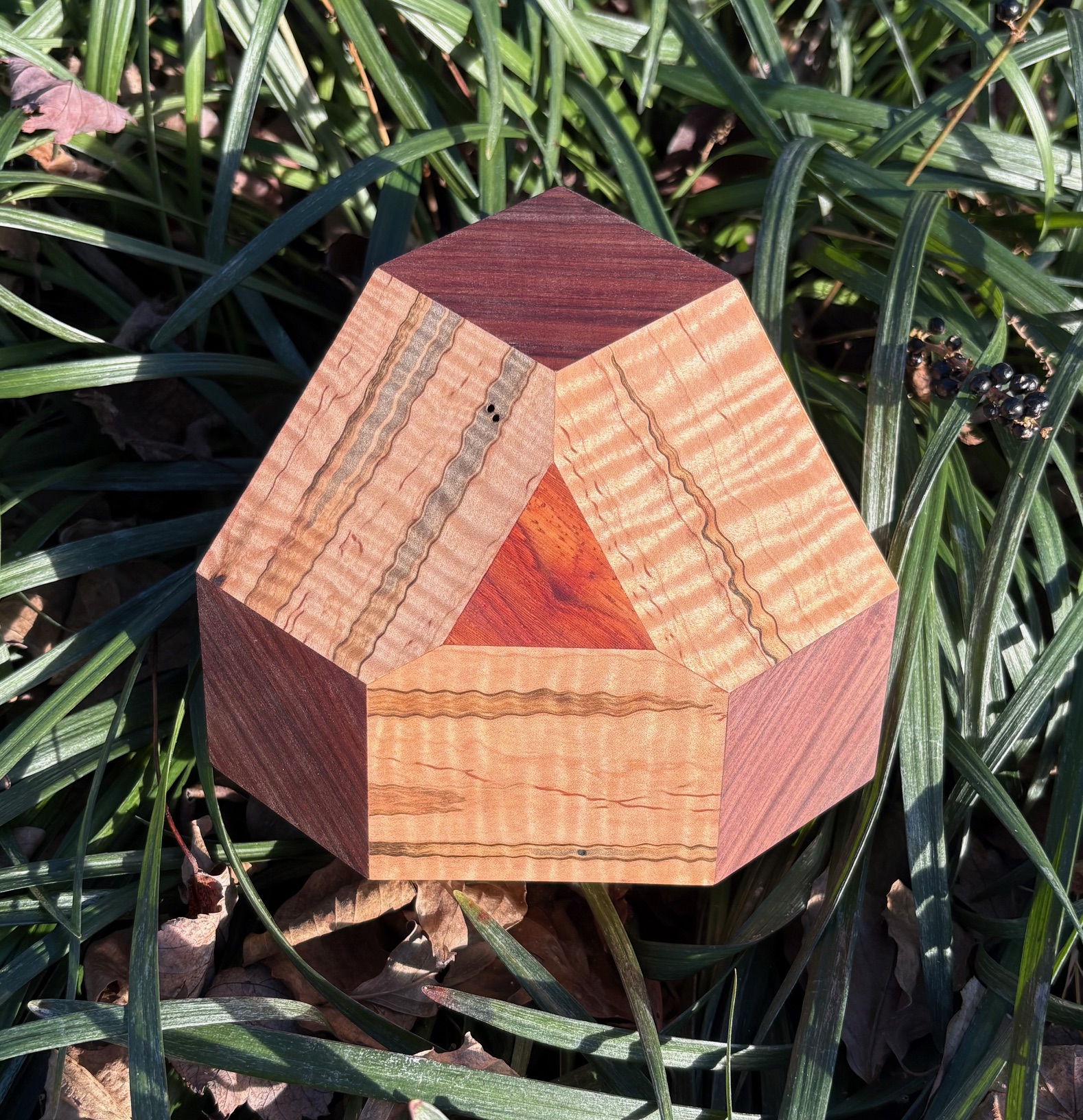
Tennantite - Tristetrahedron with Dodecahedron and Tetrahedron
Based on a specimen from Zacatecas, Mexico.
Most of the crystal models I make are chosen for the simple reason that I find the particular combination of crystal forms attractive. This little tennantite crystal is no exception, and as soon as I saw it under magnification I decided it needed a model that was easily visible to the naked eye. This one exhibits three crystal forms, a tristetrahedron, dodecahedron, and tetrahedron.
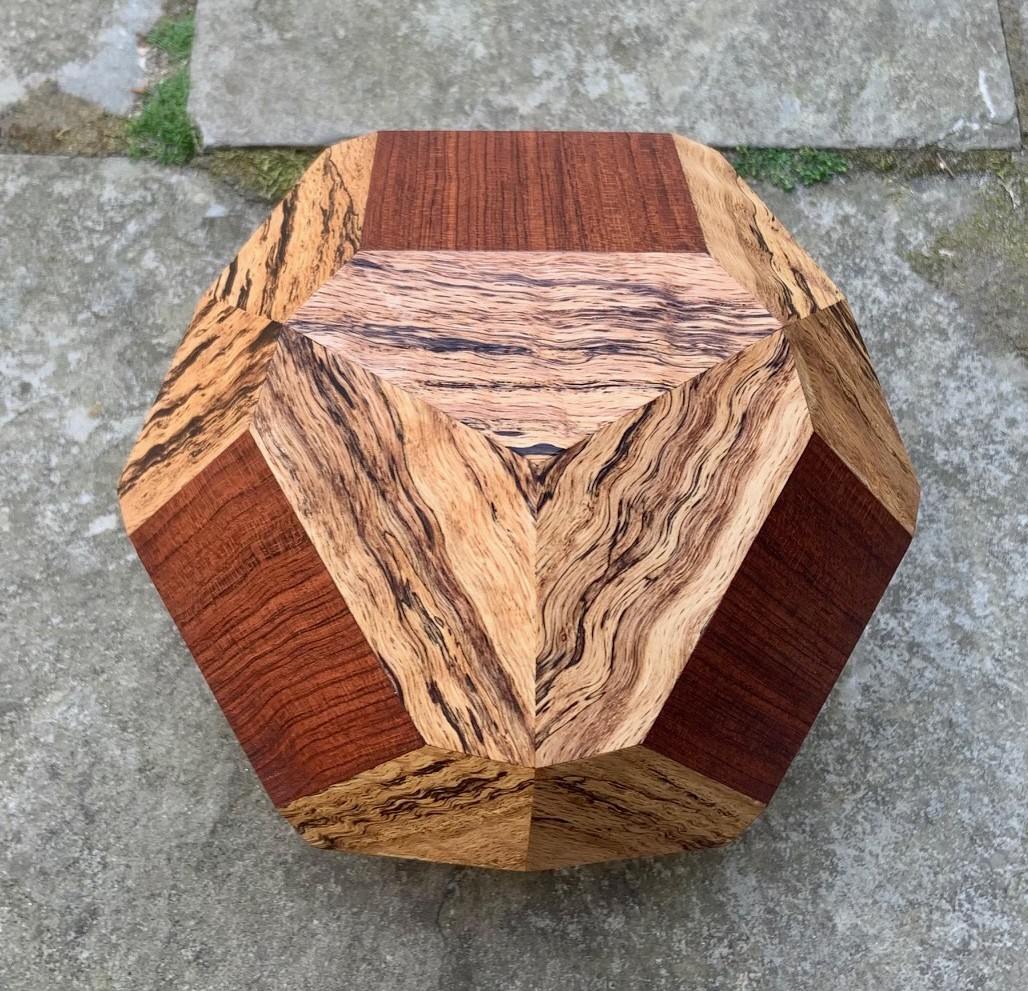
Bixbyite - cube and trapezohedron
Based on a specimen from Topaz Mountain, UT
This beautiful specimen of bixbyite on topaz was just crying out for a model! Nothing too complicated here, just a cube and trapezohedron in nicely balanced proportions. Cubes of bixbyite often have trapezohedral modifications on their corners, but often the modifying faces are tiny. This crystal has comparatively large trapezohedron faces, which makes an attractive combination of forms. The photos below are taken with the same orientation, looking down a 4-fold axis. The other photo was taken looking down a 3-fold axis, and really showcases the unique wood that makes up the trapezohedron faces.
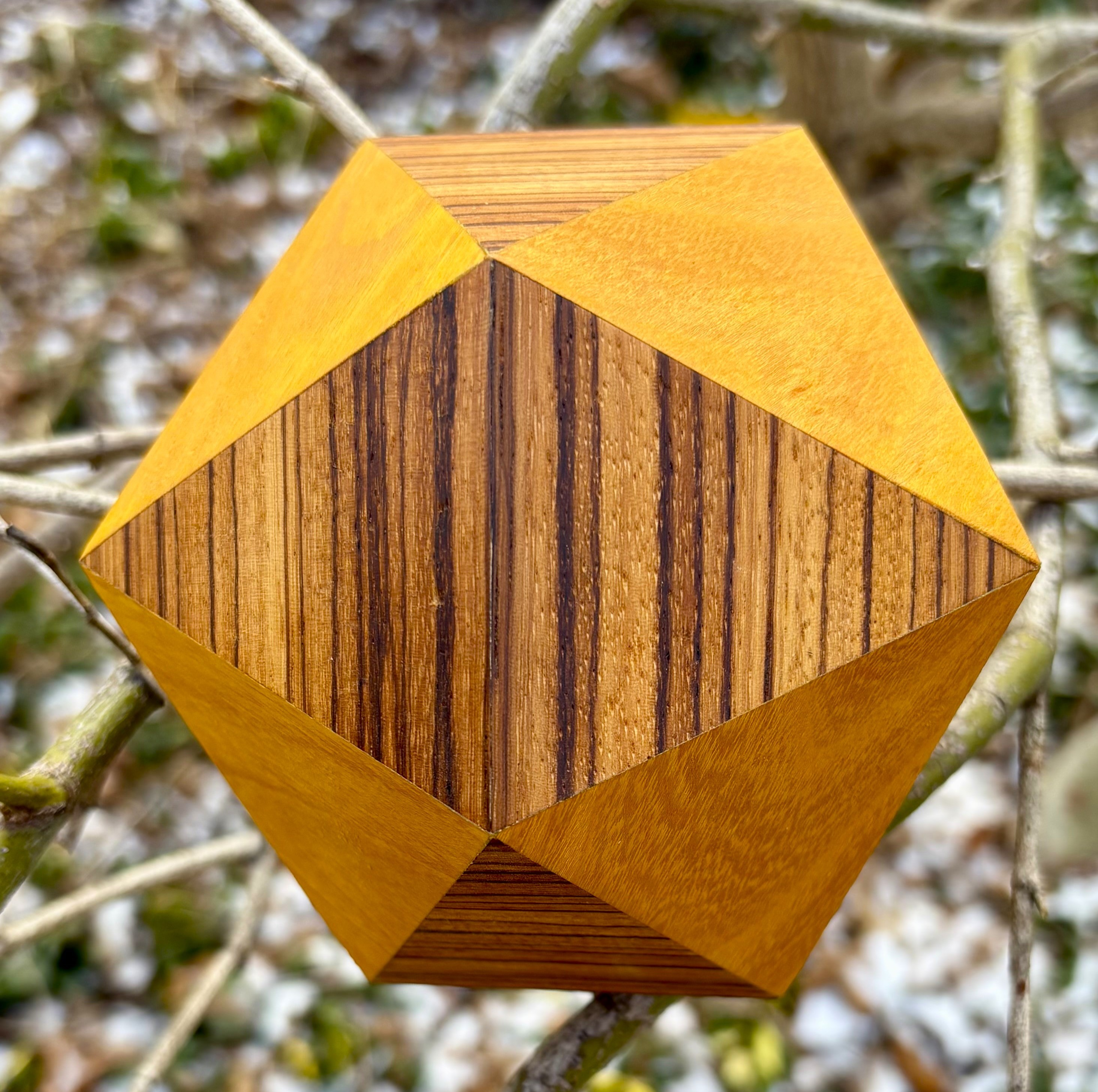
Pyrite - Pseudoicosahedron
Based on a specimen from Bingham, UT
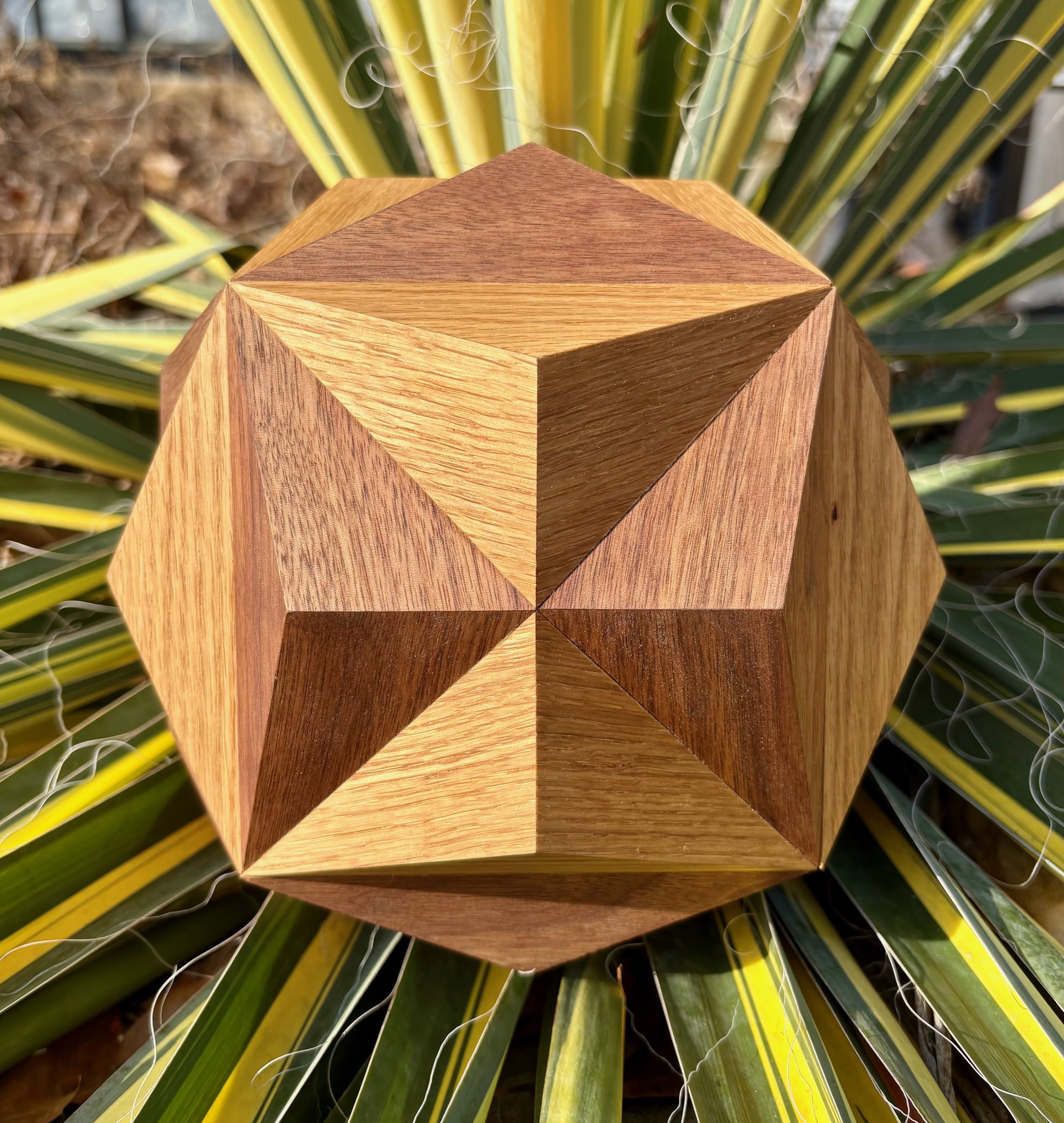
Some crystal habits are so distinctive they end up with their own names. This one is one of them, known as the pseudoicosahedron. It’s found in pyrite crystals when octahedral and pyritohedral faces occur in a particular proportion relative to each other. When the sizes of the two kinds of faces are exactly balanced, the 8 octahedron faces and 12 pyritohedron faces are all triangular, and are quite difficult to tell apart. The whole shape appears at first glance to be composed of 20 equilateral triangles, and resembles (but is not equivalent to) an icosohedron, the 20-sided Platonic solid with 5-fold symmetry.
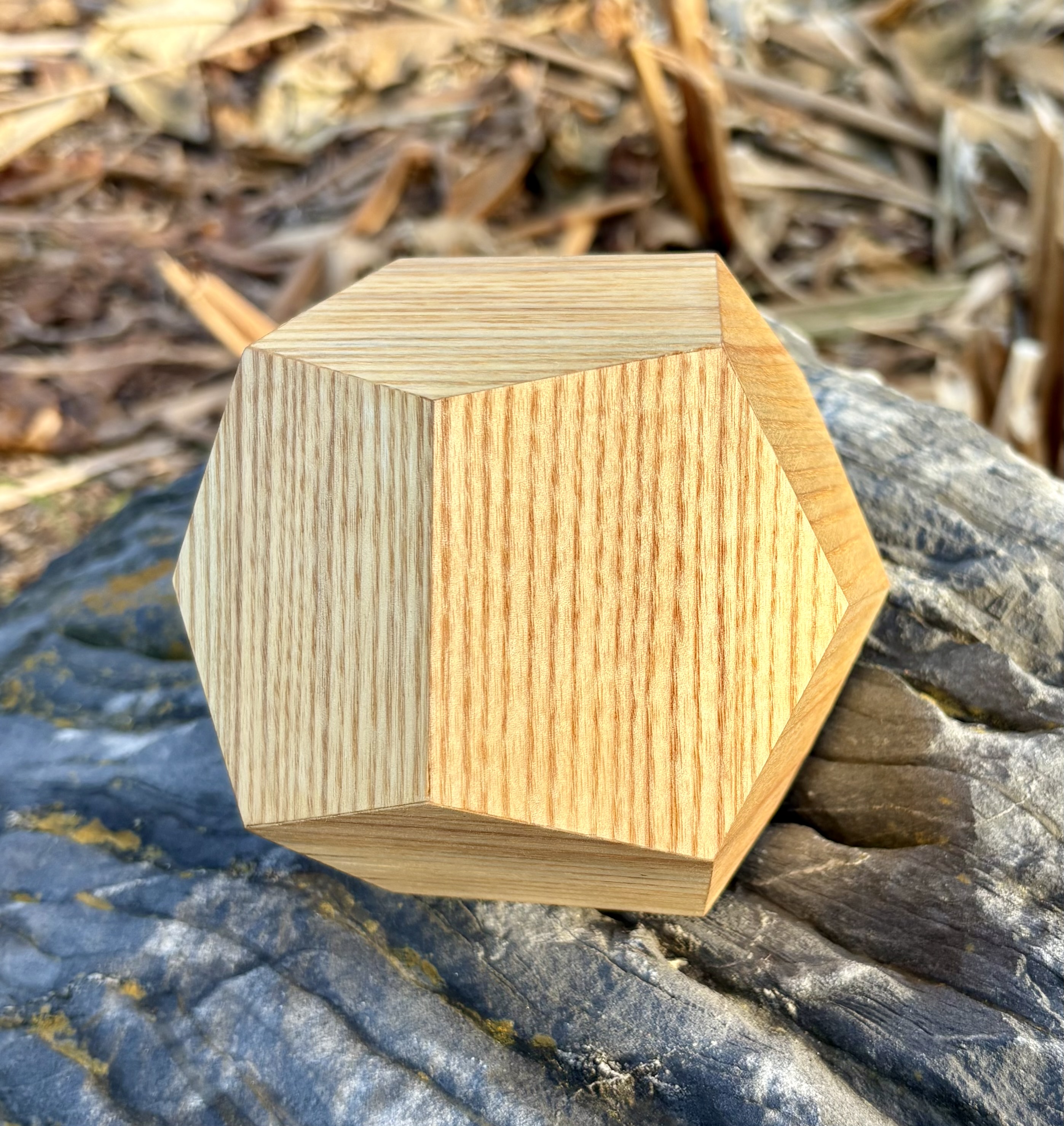
Pyrite - Pyritohedron
Based on a specimen from Huanzala, Peru
One of the first things you learn in a crystallography class is that one, two, three, four, and six-fold symmetries are all possible, but a true 5-fold axis of rotation is impossible in crystals. (Objections relating to quasicrystals are noted, but the structure of quasicrystals is not periodic as required by the strict definition of a crystal. I will write a post on quasicrystals if/when I get my hands on a specimen!) Some crystals, however, appear at first glance to have this forbidden symmetry, although a careful check of their interfacial angles will prove that they do not.
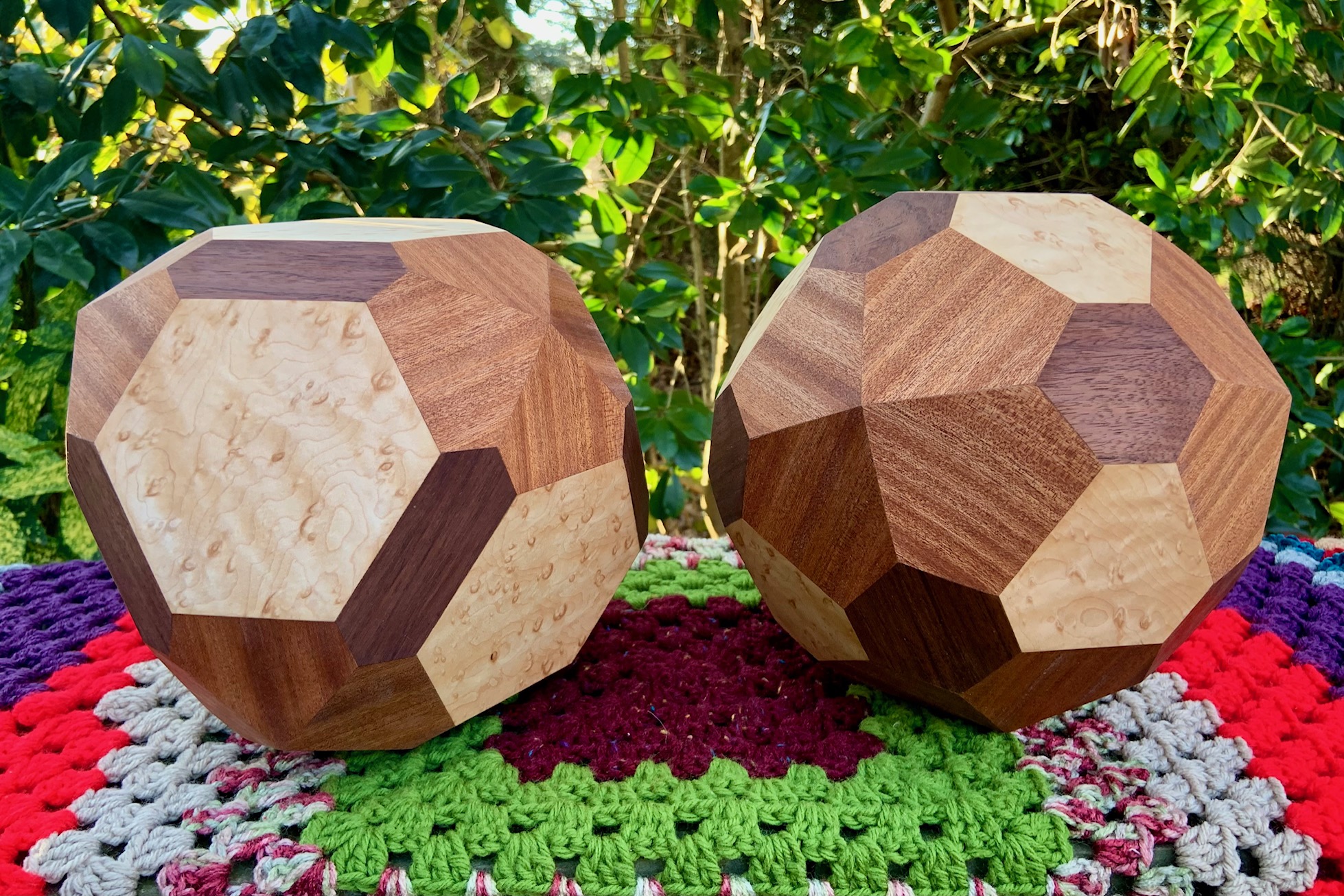
Spinel Pair
Based on specimens from Russia and Canada
At the 2023 East Coast show in Springfield MA, I was delighted to find two complex spinel crystal specimens from two different dealers. One, from Siberia, was large, sharp, and highly symmetrical like something out of a textbook. The other, from Baffin Island, Canada, was a pleasing shade of dark blue but distorted in a way that made its jumble of faces difficult to sort out. I bought them both, but upon further investigation in my hotel room that evening I was disappointed to find that both crystals were bounded by the exact same forms! Although I was initially grumpy about the coincidence, I eventually realized that models of these crystals would make a very nice pair. The completed set makes the similarities between these two seemingly very different crystals readily apparent.