About the Models
Wood Crystal Models
The forms of complex crystals are notoriously difficult to visualise in three dimensions. For centuries, students of crystallography have relied upon 3D wooden models to supplement the elegant line drawings contained in mineralogy texts. Antique wood, glass, plaster and paper models have become rare and valuable collectors items in their own right, as very few are produced at present. The wooden crystal models shown on these pages are part of a historical tradition stretching back to the birth of crystallography as a science.
Please see below for a short introduction to what I do. Then return to the main page and scroll through some photos of models I have made. Clicking the “read more” link will bring up additional photos and information. If you are a mineral collector, you may enjoy seeing photos of the specimens these models are based on, which I’ll include in the details. If you find a model you’re interested in purchasing, see the bottom of this page for more information.
About my Models
The models shown on this page are either representations of real crystals that I have handled personally, or recreations of well-known diagrams in Dana’s A Textbook of Mineralogy, 4th ed., edited by W.E. Ford. Here’s an example of a figure from the book and the models that represent it.
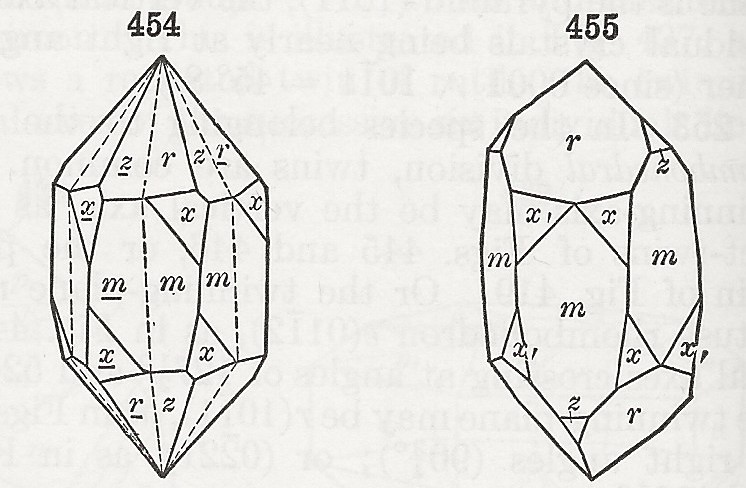

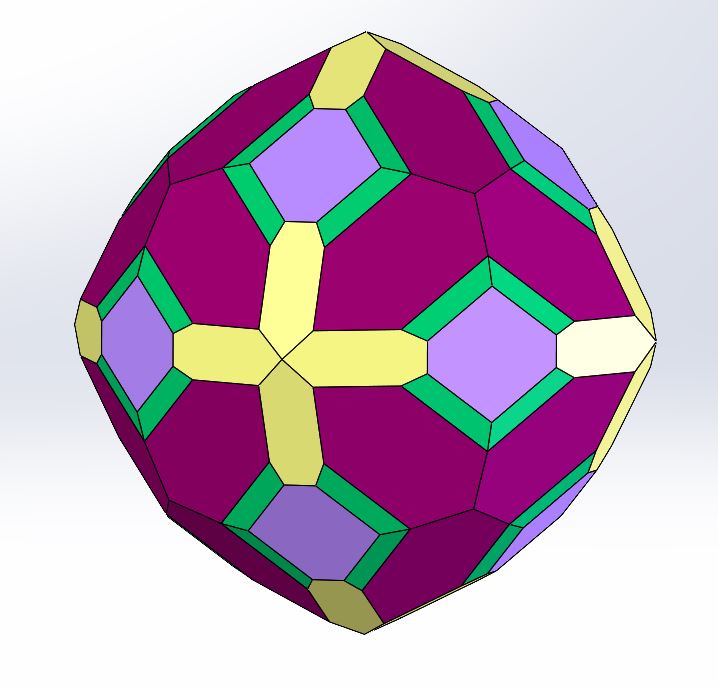
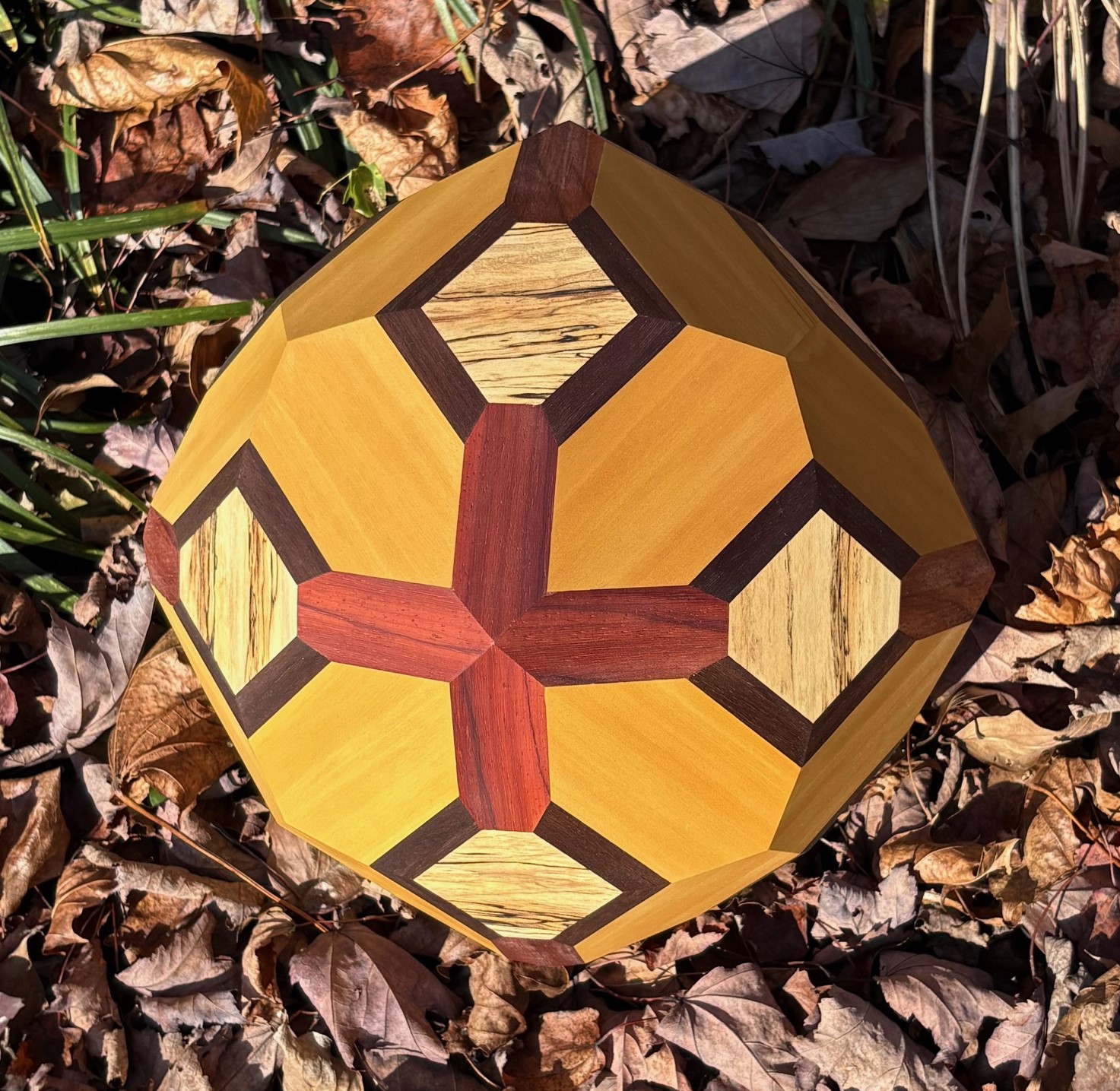
Angles and face shapes were calculated with the assistance of CAD modeling, and are accurate enough for educational use. That is to say, the models are not simply artistic interpretations of what a crystal looks like, they are actual three dimensional renderings of the crystal forms and their combinations. The angles I calculate during the planning stages are accurate to two decimal places. The angles on a finished model are as close to that ideal as my tools, materials, eyes, and hands allow. Here’s one of my CAD models next to the wood model I eventually made.
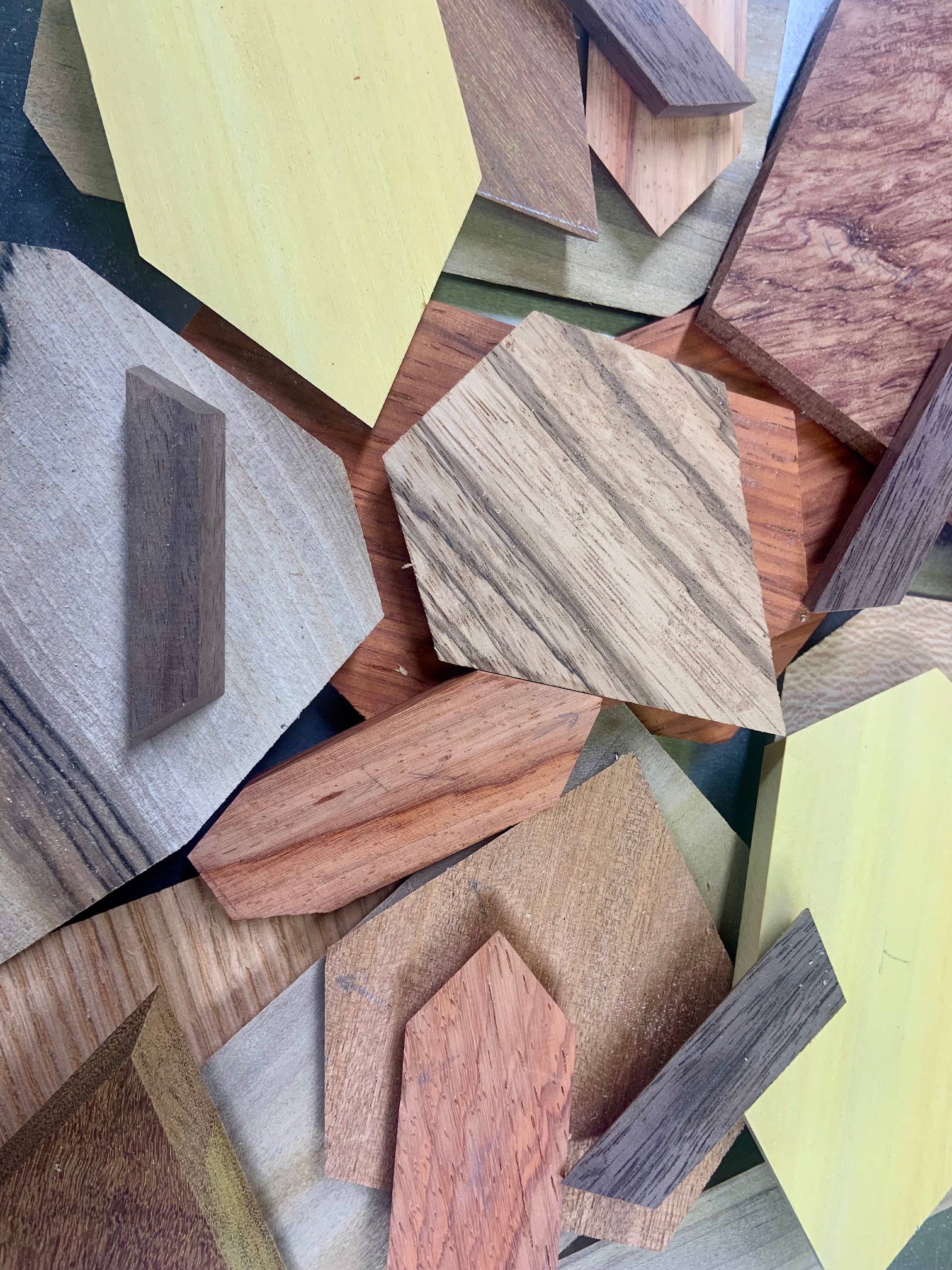
Once the face shapes and angles are calculated, I make no further use of a computer during any step of the process. No part of a model is made by CNC or any other automated process. Faces of models are cut one edge at a time, using normal tools found in any backyard wood shop (band saw, table saw, planer, belt sander, etc.). The models are glued, hand sanded, and finished with Odie’s Oil for shine and protection (see care instructions for details).
The wood used in these models is chosen to produce a pleasing color scheme. Normally, each crystal form in a model is assigned one type of wood, so the resulting pattern of colors can help make the interaction of multiple forms clearer. In the example below, it’s a little harder to see the pattern of the octahedron and pyritohedron faces in the line drawing.
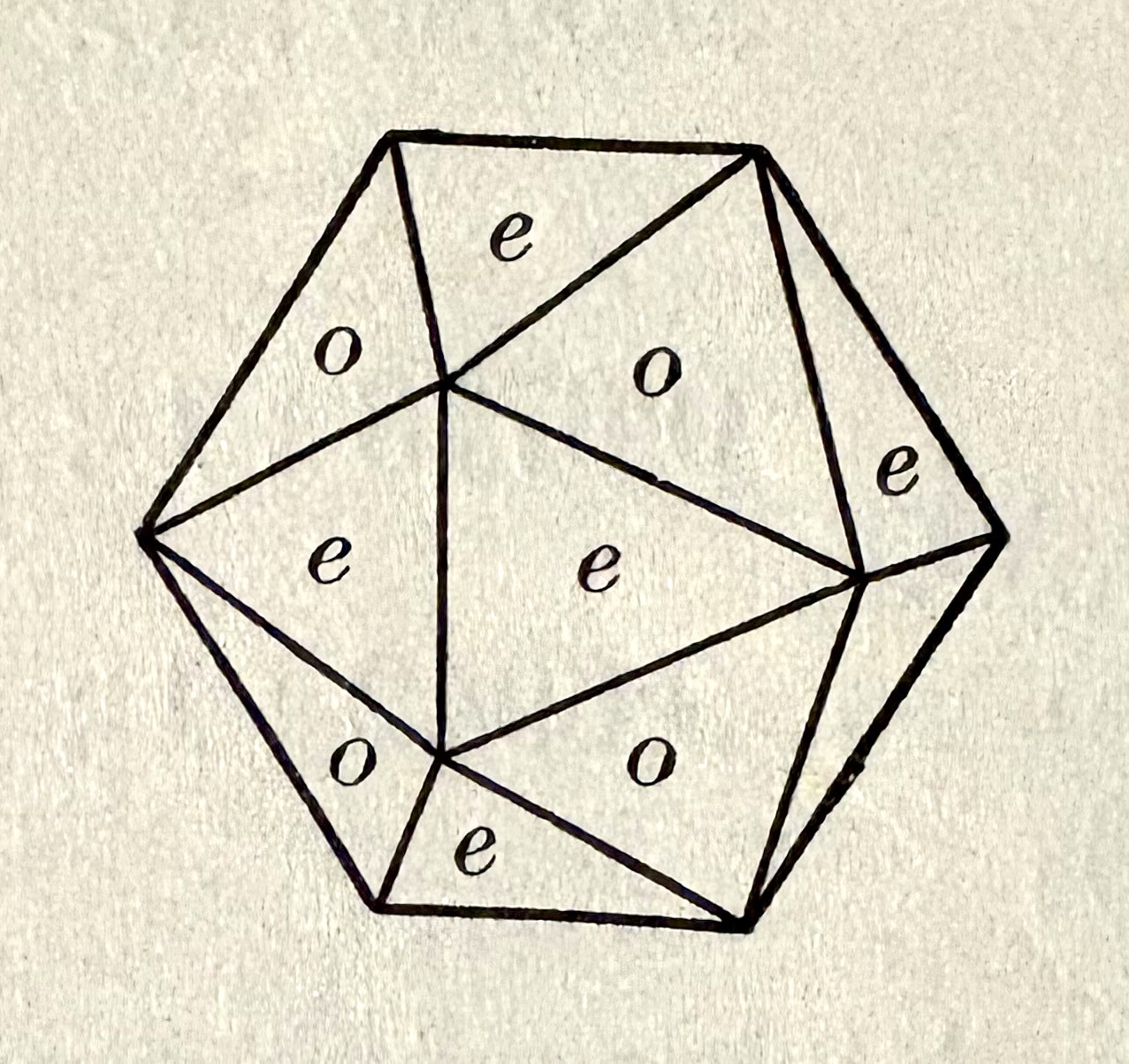
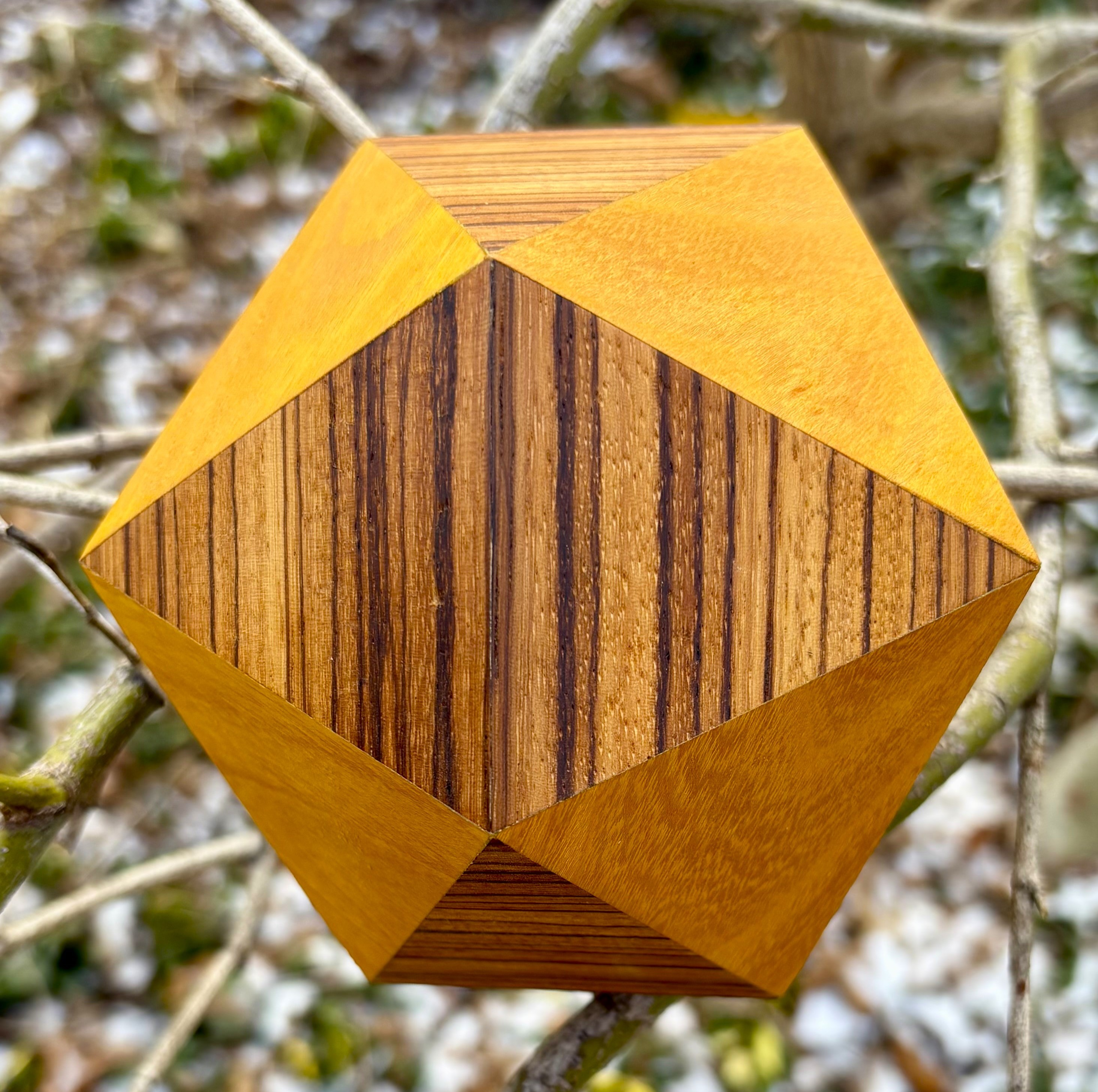
Sometimes I try to use woods with a strong, straight grain to represent striations (which the zebra wood for the pyritohedron faces accomplishes on the model pictured above), or I’ll pair light and dark shades of similar color across twin boundaries.
Purchasing Models
Please contact me here if you’re interested in purchasing a model. Sometimes the exact model you see will be available for purchase, but if it’s not, a new one can be made with your choice of wood(s). Lead times start at 6 to 8 weeks, but may be longer if the model is complex or if there are other orders ahead of yours.
Models can often be made in different sizes. The staurolite fairy cross twins and the iron cross pyrite twins are a good example. Very small and very large models can present some problems, but reach out and let me know if you’re interested in a particular size and I’ll see what I can do.
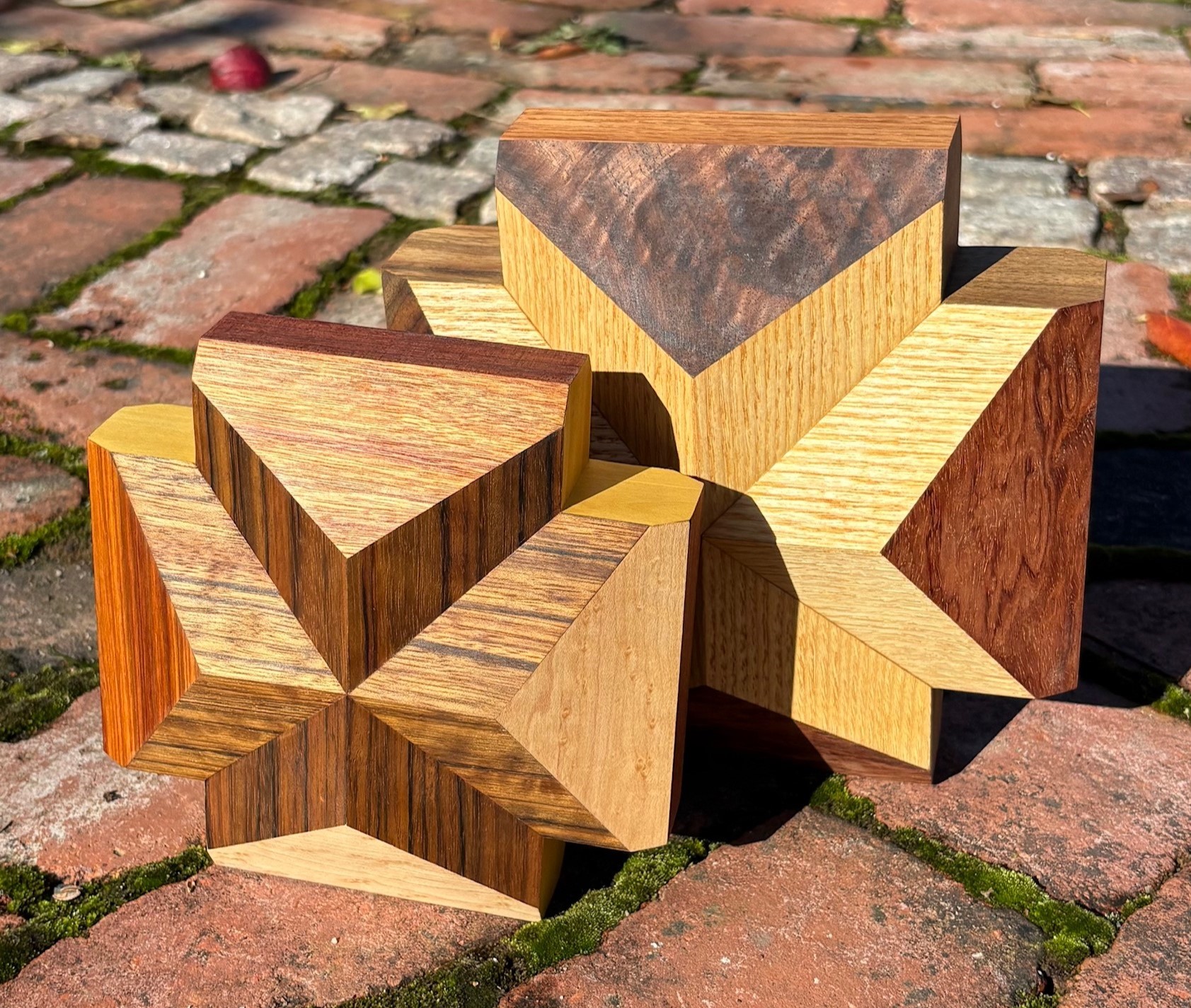
Some models would work well as boxes or display cases. Hinged lids, internal platforms, lighting, and other features can be added depending on the geometry of the model. I love the idea of a crystal model that functions as a display box or case for a matching specimen, and I have two examples on this site. Here’s one that’s a spinel twin. (I don’t have the other uploaded yet!) I also have a crystal model hat and handbag, so if you have an idea for something unique and creative, please let me know!
I’d also love to hear from you if you’re interested in a custom model. I can create models based on figures in Dana or other textbooks, or make one to match a unique or special specimen in your collection.