Bixbyite with Braunite Lamellae
Based on a specimen from Thomas Range, UT
This model was inspired by a beautifully symmetric but tiny crystal of bixbyite. There are little concavities along the edges of the main crystal, as well as the expected trapezohedral corner modifications. A little investigating convinced me that the faces that made up the concave regions were also trapezohedron faces, but what were they doing in the centers of cube edges, and why were they so nicely symmetrical? And what, if anything, did they have to do with the striations that crossed in the center of every cube face?
As it turns out, the “striations” are actually an epitaxial intergrowth of the mineral braunite, which precipitated in thin layers on the bixbyite host crystal early in its growth. One article I read suggested that these braunite lamellae could somehow induce the formation of the extra trapezohedron faces, leading to their symmetrical arrangement. Fascinating and beautiful!
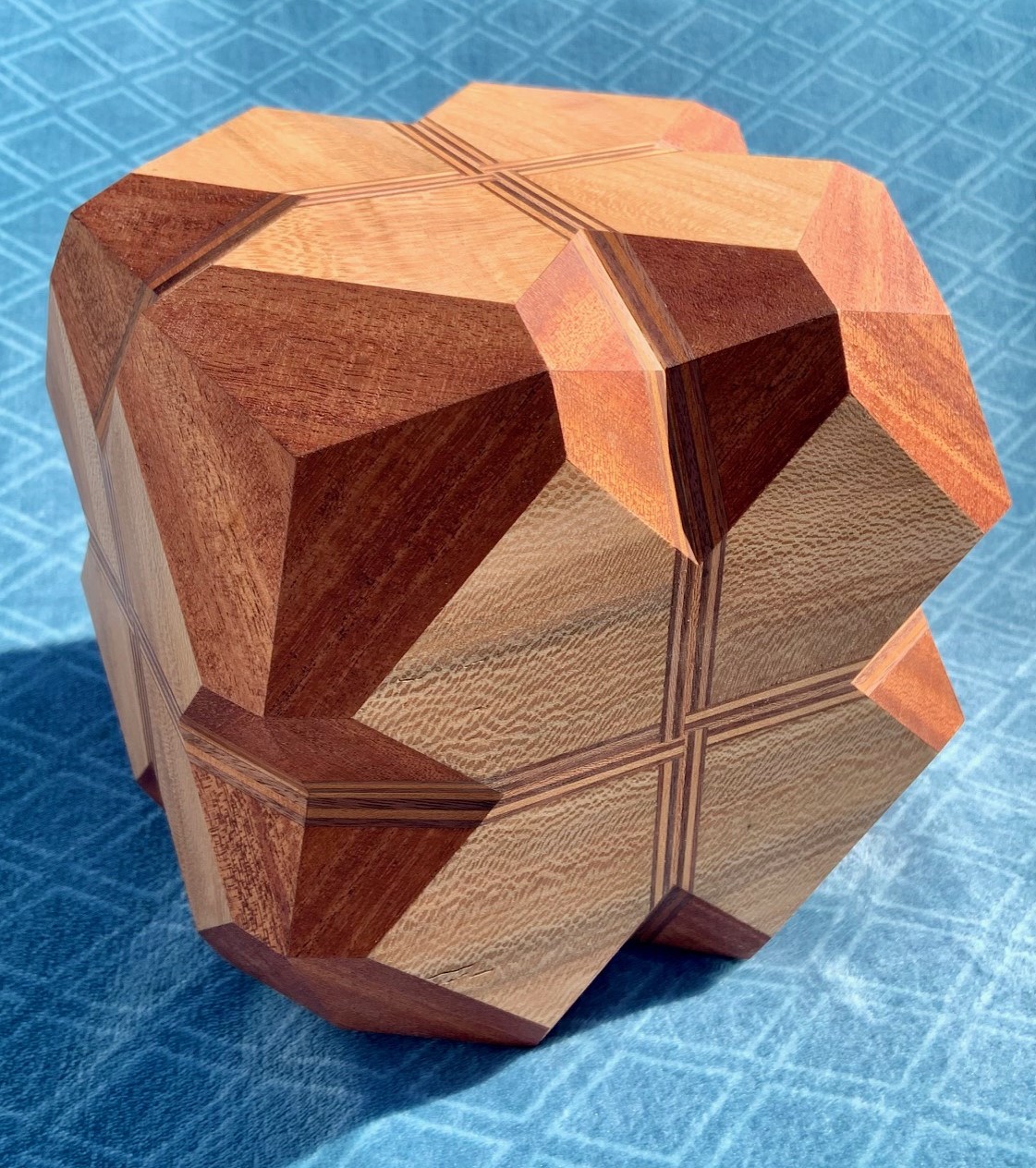
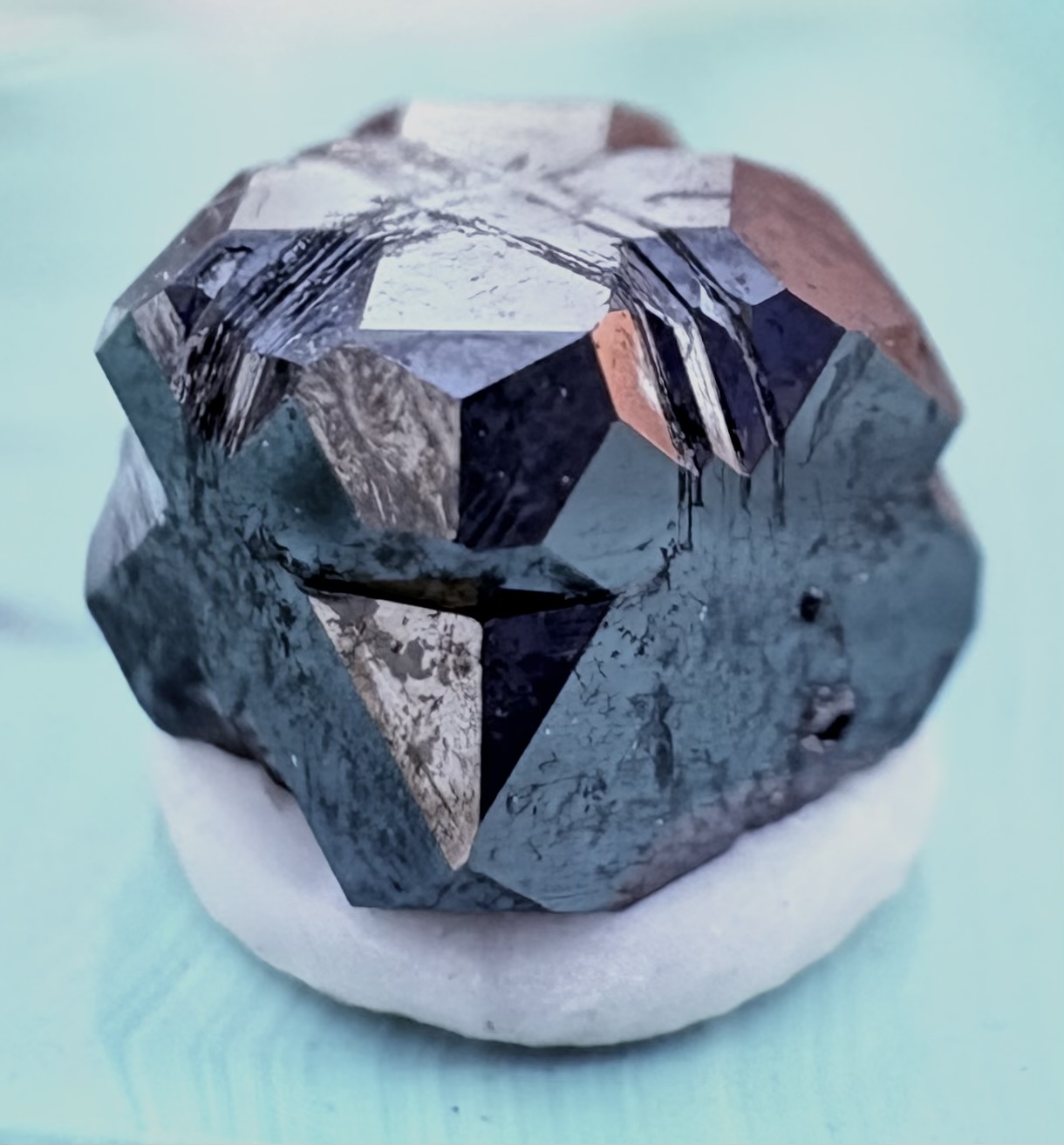
This model was my first attempt at inlaying a linear pattern into a flat face. The contrasting lines that cross the model represent the thin braunite lamellae visible on the surface of the real crystal in the photo. I’m also using the same technique to inlay dotted lines representing twin boundaries into models of twinned crystals. For an example, see my Dauphine quartz twin model here.
Model details: 7" across cube faces. Cube faces are sycamore. Trapezohedron faces are sapele. Inlay is composed of thin strips of maple and walnut.
Specimen details: Bixbyite crystal with braunite lamellae. Thomas Range, Juab Co., Utah. 5mm crystal