Quartz - Brazil twin
Based on a specimen from Canton of Graubunden, Switzerland
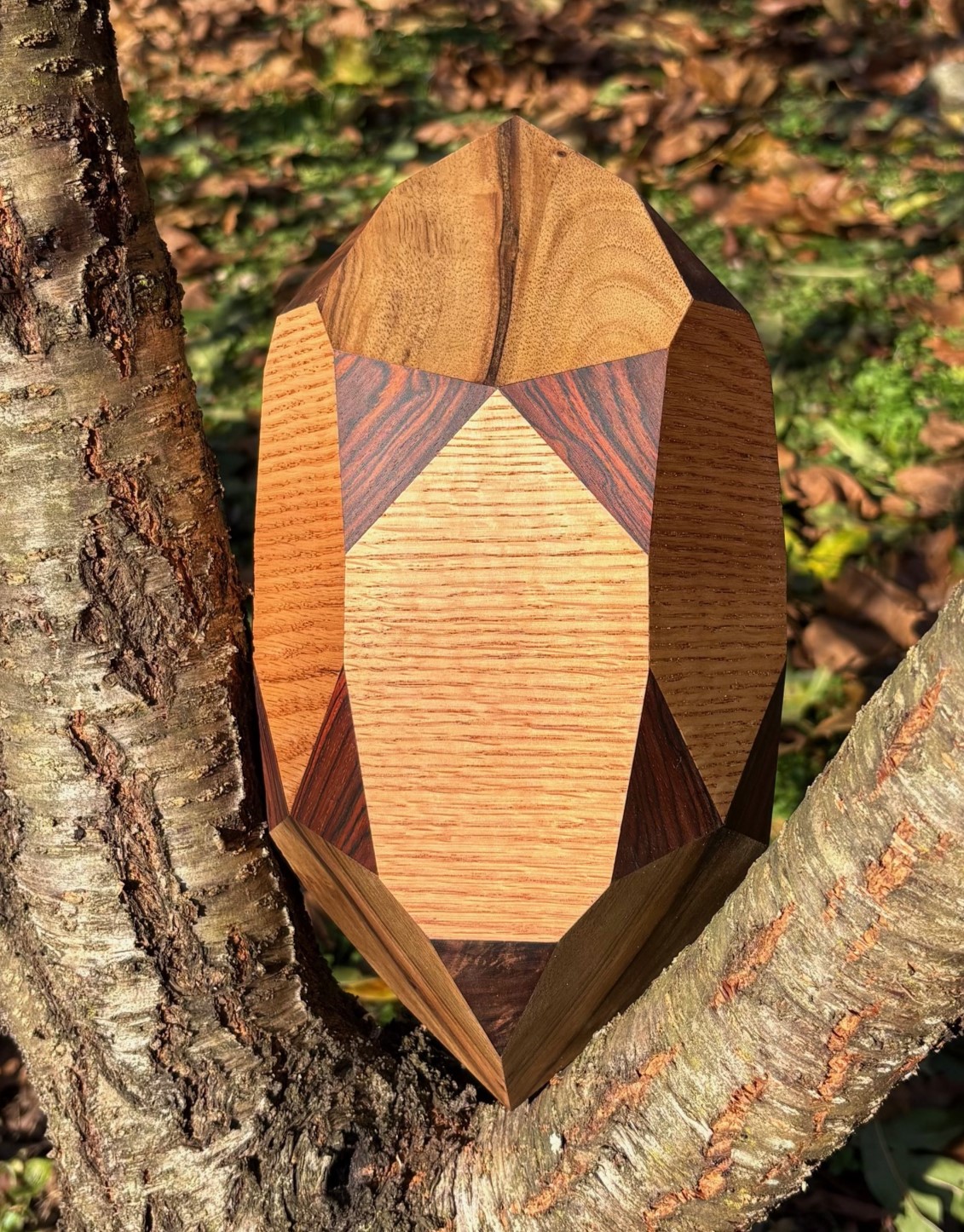
The Brazil twin law is a parallel axis twin found in quartz, combining a right and a left handed individual. Ideal drawings of a fully developed, symmetrically twinned crystal are often found in textbooks, and make for some really lovely diagrams (see below for one of them). Unfortunately, actual crystals with these faces are extremely rare, but it’s possible that I have one in my collection. More about that below, but first here’s a wood model representing the ideal form, depicted in fig. 455 from Dana’s A Textbook of Mineralogy, 4th ed., edited by W. E. Ford.
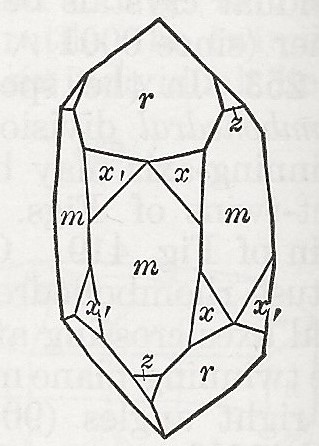
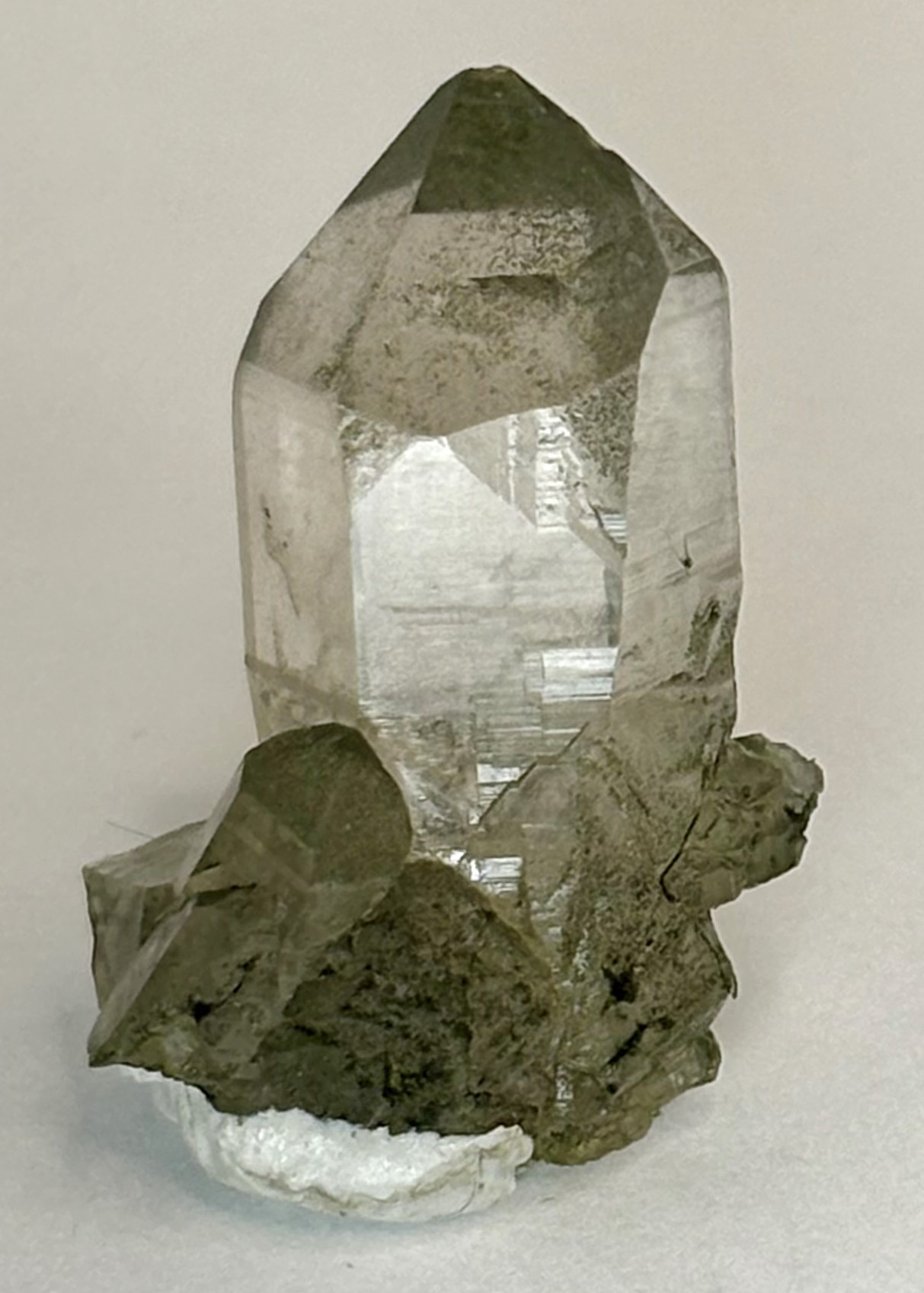
Here is a photo of my likely Brazil twin, next to a photo of another specimen in my collection that shows Brazil twinning. It’s a polished slice through an “ametrine” quartz crystal, made up of sectors of amethyst and citrine. The amethyst regions are known to be composed of thin alternating layers, each twinned in relation to the next - polysynthetic twinning on the Brazil law.

Even though specimens resembling textbook diagrams are rare, Brazil twinning itself is very common, often present in crystals without being expressed morphologically through development of faces. It is usually invisible, detectable only by sophisticated tests, but occasionally evidence of its existence is revealed, as in the ametrine slice above.
In addition to the Brazil twin model of fig. 455 from Dana’s Textbook, I’ve also made a model of fig. 454, the Dauphine twin. Both models are shown below, and you can read the post about Dauphine twinning here.

To see regular, untwinned, right and left handed quartz models, click here.
Model details: 11" tip to tip. Prism faces are red oak, positive rhombohedron faces are English walnut, and negative rhombohedron faces are black walnut. Trigonal trapezohedron faces are cocobolo.
Specimen details: Quartz, apparant Brazil twin. Canton of Graubunden, Switzerland, 3.5 cm. This crystal was examined by a number of knowledgable individuals, with the consensus that it is likely to be a Brazil twin. Proof would require destructive testing, which I’m not willing to do.
Second specimen: Quartz, section of “ametrine” crystal with Brazil twinned amethyst zones. Anahi Mine, La Gaiba Dist., Sandoval Prov., Santa Cruz Dept., Bolivia. 5.5 cm.