Chrysoberyl Trilling
Based on a specimen from Novello Claims, Zimbabwe
This model was one of the most labor intensive I ever made, and occupied the entire winter of 2026. Although it turned out well, it was an extremely difficult and complicted model to make. Every set of pieces was a challenge - reverse bevels, extremely narrow pieces, angles over 45 degrees, and complex assemblies of pieces that had to be cut and assembled in multiple stages. Not to mention the surprising complexities introduced by including the dotted line! Most of my models include a challenge or two, and I’m happy to have them since they drive me to improve my technique. But every aspect of this model seemed to present a new issue.
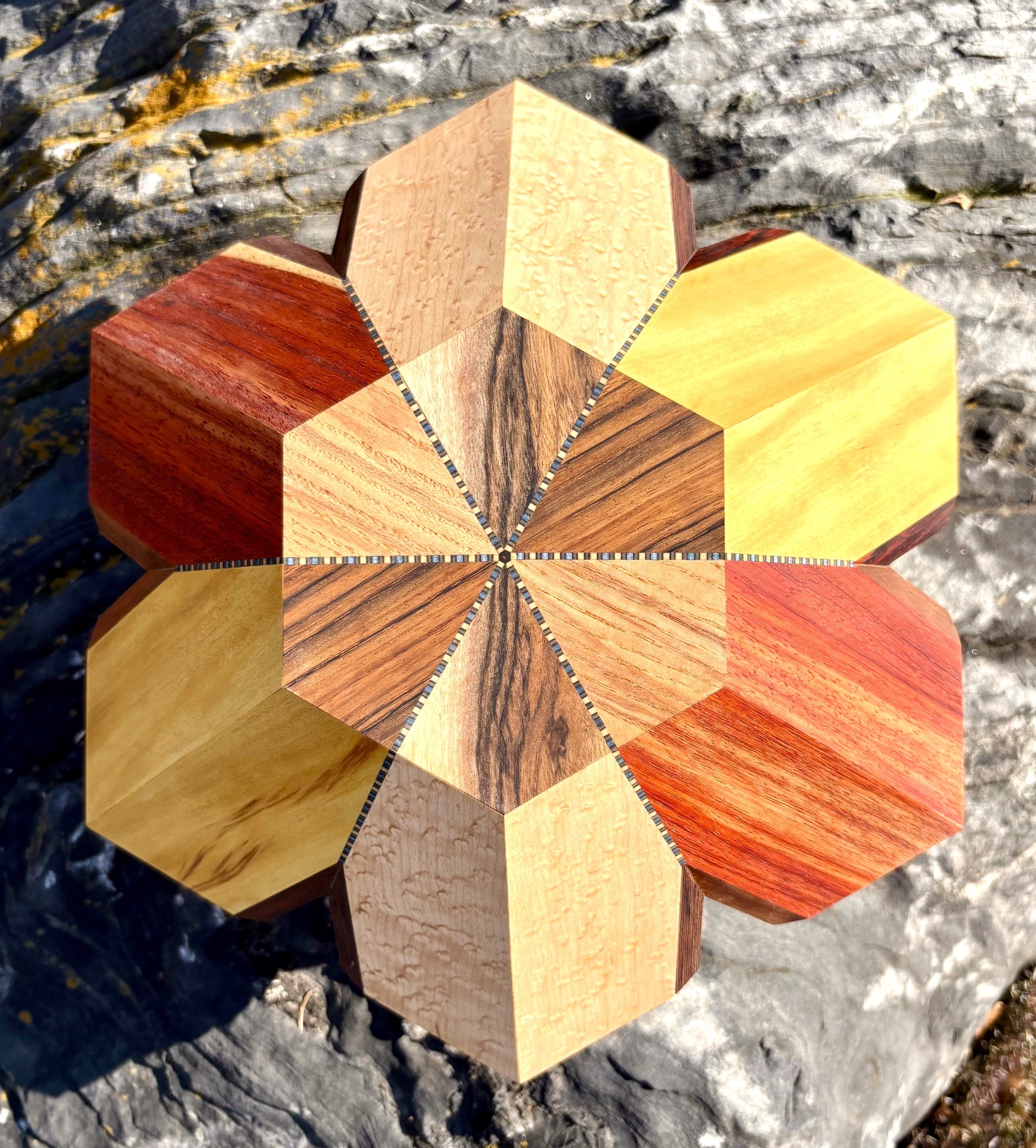
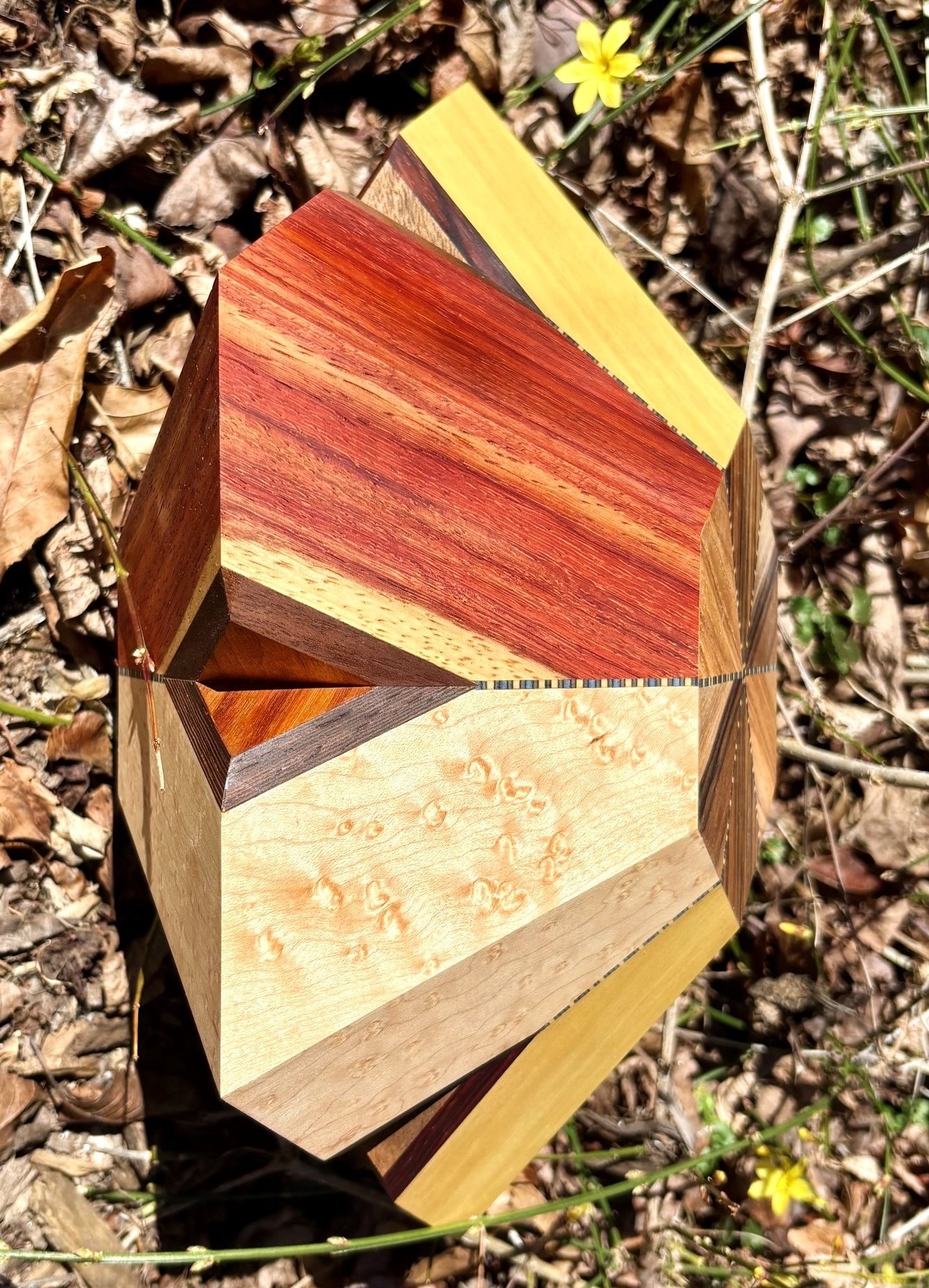
The first complication arrived early. I noticed that my best specimen of chrysoberyl was pretty similar to a beautiful line drawing shown in fig. 421 from Dana’s A Textbook of Mineralogy, 4th ed., edited by W. E. Ford. Not every reentrant angle exists in the specimen, but I decided it was close enough to justify the model.
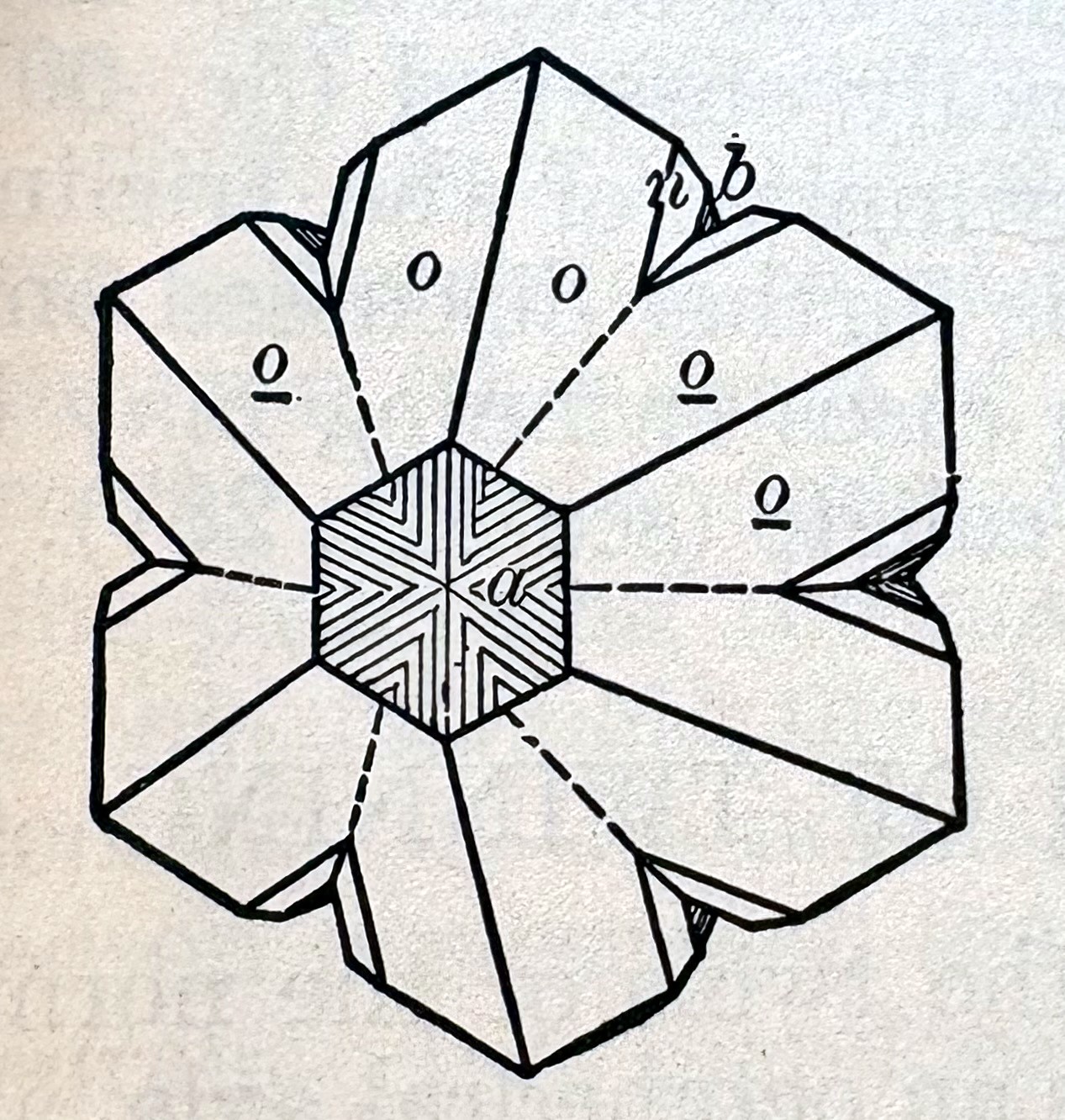
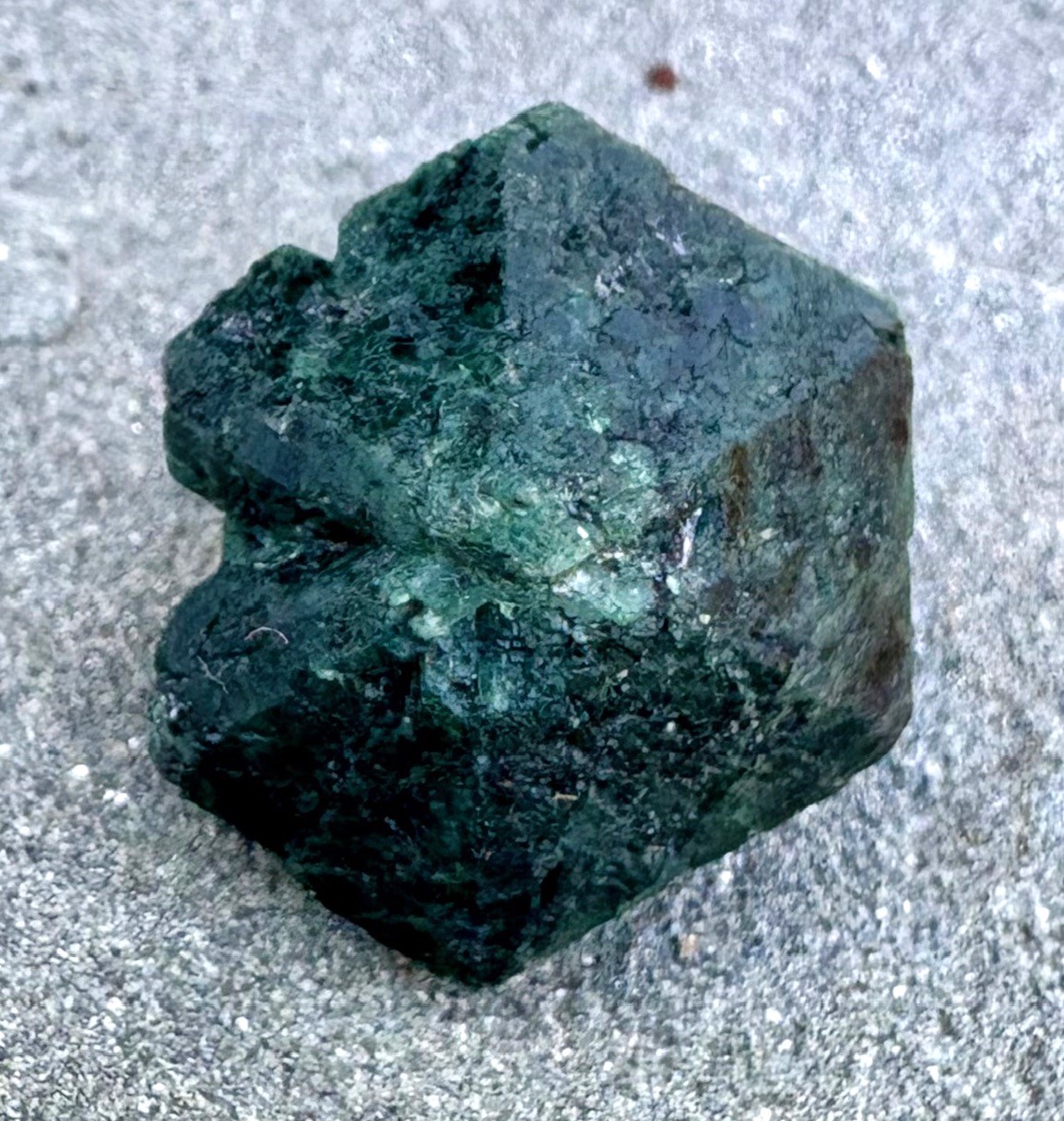
Dana refers to this drawing as a trilling. But while doing preliminary research, I found that some other resources refer to these crystals as sixlings. Which was right? Or, if both were possible, which was my crystal? After a lot of research and a lot of discussion with other knowledgeable collectors, it turns out that both sixlings and trillings are possible. It’s extremely difficult to tell the difference between them in real crystals, so that freed me to decide which one I wanted to make. A trilling sounded more aesthetically pleasing, so I went with that.
As work on the model proceeded, I began encountering additional problems. Some were expected - the angles involved were tricky, and the narrow faces were narrow in the extreme. But a few were surprises. Inserting the dotted line seemed like a good idea at the time. I had some line left over from my Dauphine twins, and since dotted lines are shown in Dana’s figure, I decided to include them. But the lines caused a whole series of geometrical problems, some of which were completely unexpected. Delays increased as I had to stop work to figure out how to handle issues, and I worried about how everything would fit if I ever got far enough to do a final assembly. The two worst problem areas are shown below in closeup.
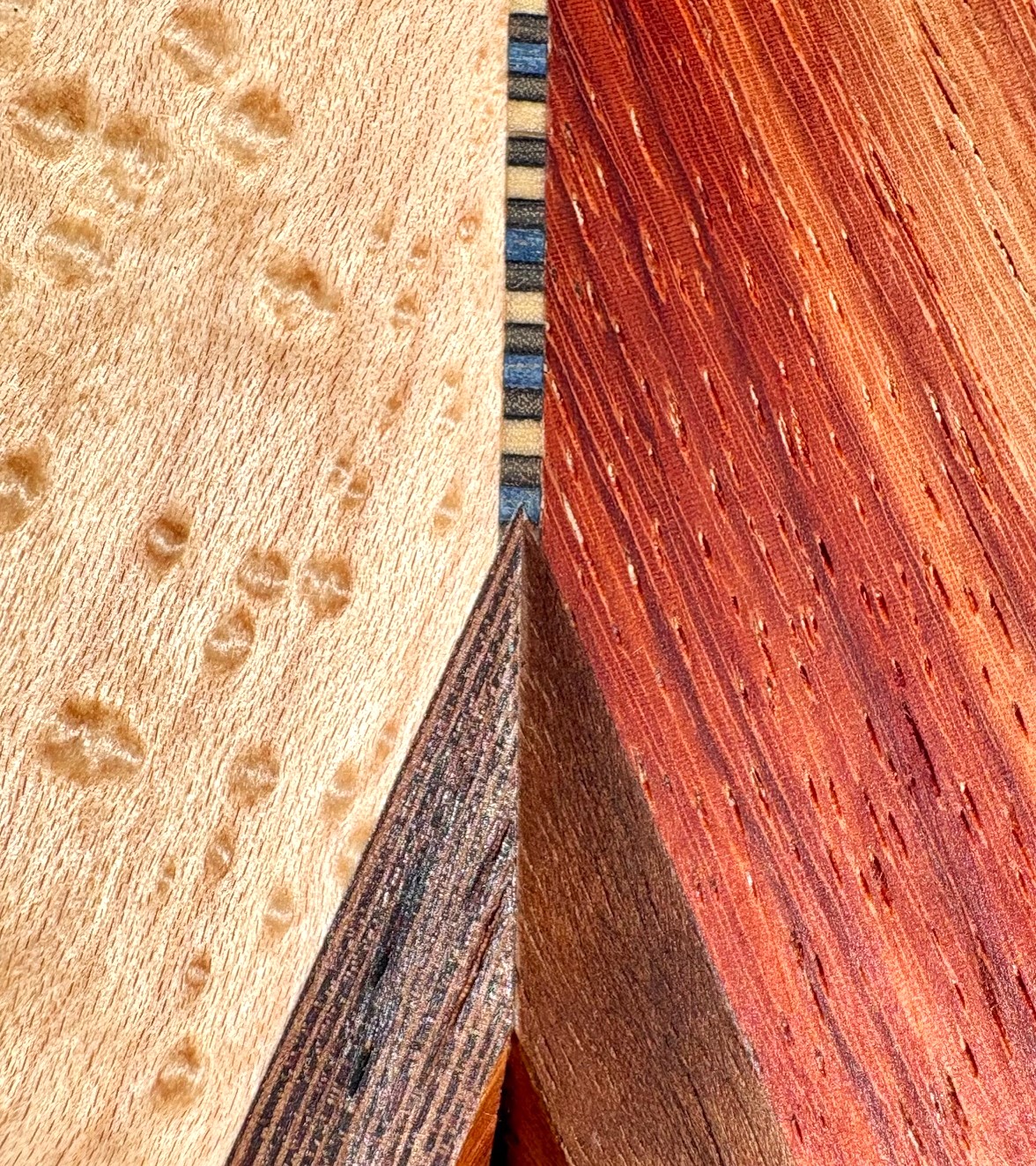
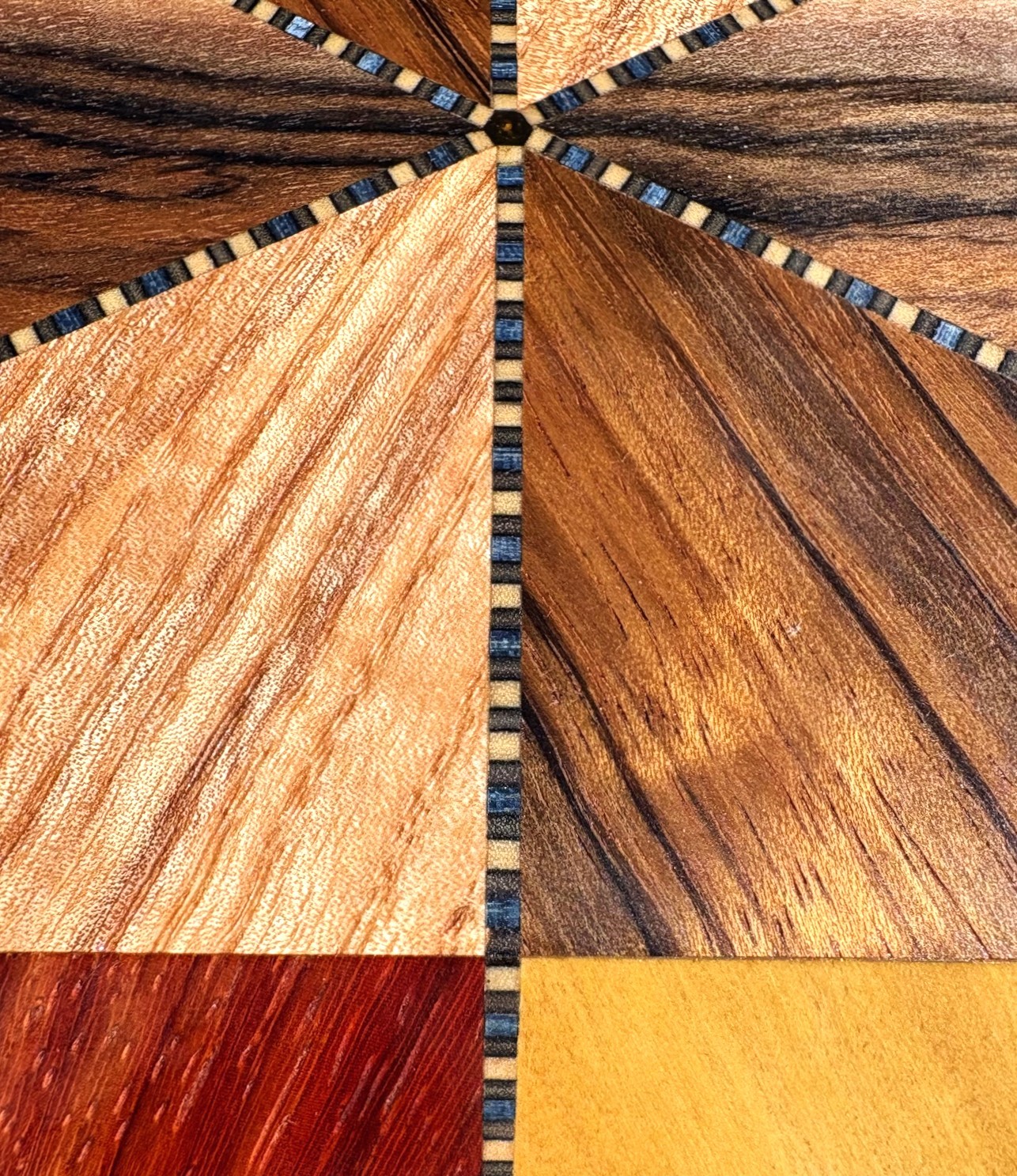
This chrysoberyl model was an exercise in patience and persistance, and I’m relieved that it paid off. I think I learned more from making this model than any other I have made, and the knowledge will come in handy in the future. But for now, I’ll be happy making something simple for my next project!
Model details: 11.5" across. o{111} faces are padauk, yellowheart, and birdseye maple. a{100} faces are English walnut, ash, and shedua. n{121} faces are wenge, cocobolo, and black walnut. b{010} faces are canary, cherry, and English walnut.
Specimen details: Chrysoberyl var. Alexandrite cyclic twin (trilling). Novello Claims, Masvingo, Zimbabwe. 2.3 cm across points.