Quartz - Dauphine twin
Based on a specimen from Uri, Switzerland
The Dauphine twin law is a parallel axis twin combining either two left or two right handed quartz crystals. Quartz is commonly twinned according to the Dauphine twin law, but specimens exhibiting ideal form are less common than might be expected. Faces that would reveal twinning are not always expressed, and twin boundaries are often irregular and hard to see. That means in a crystal whose faces don’t reveal its handedness, twinned regions with seamless boundaries can pass unnoticed. (Models of quartz crystals whose handedness can be determined are shown here)
In order to illustrate a perfectly developed twin, I made a wood model representing the ideal form of a right handed Dauphine twin as depicted in fig. 455 from Dana’s A Textbook of Mineralogy, 4th ed., edited by W. E. Ford.
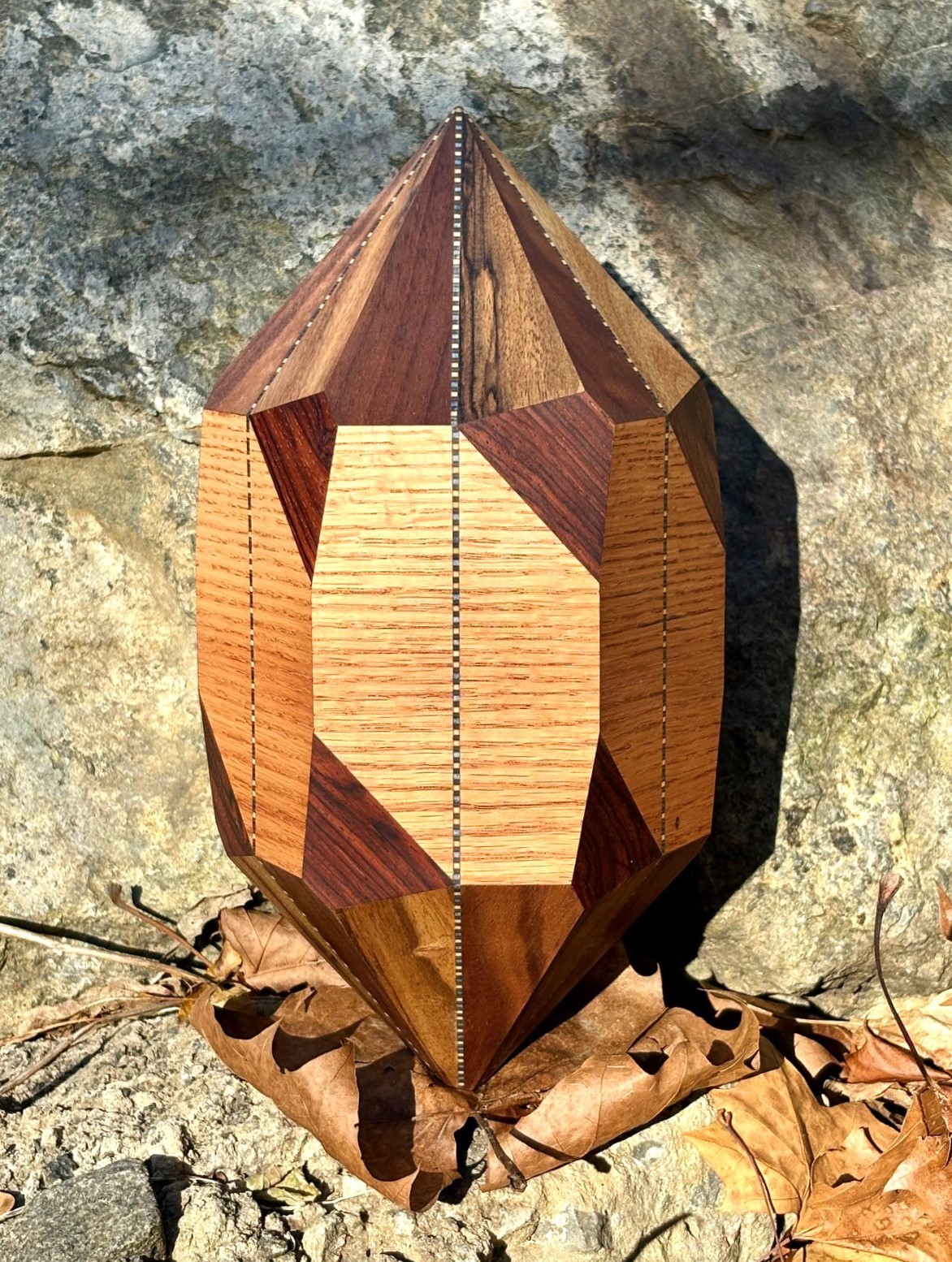
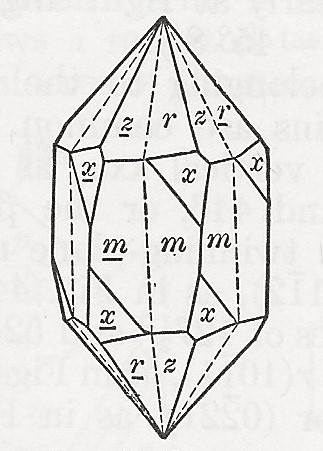
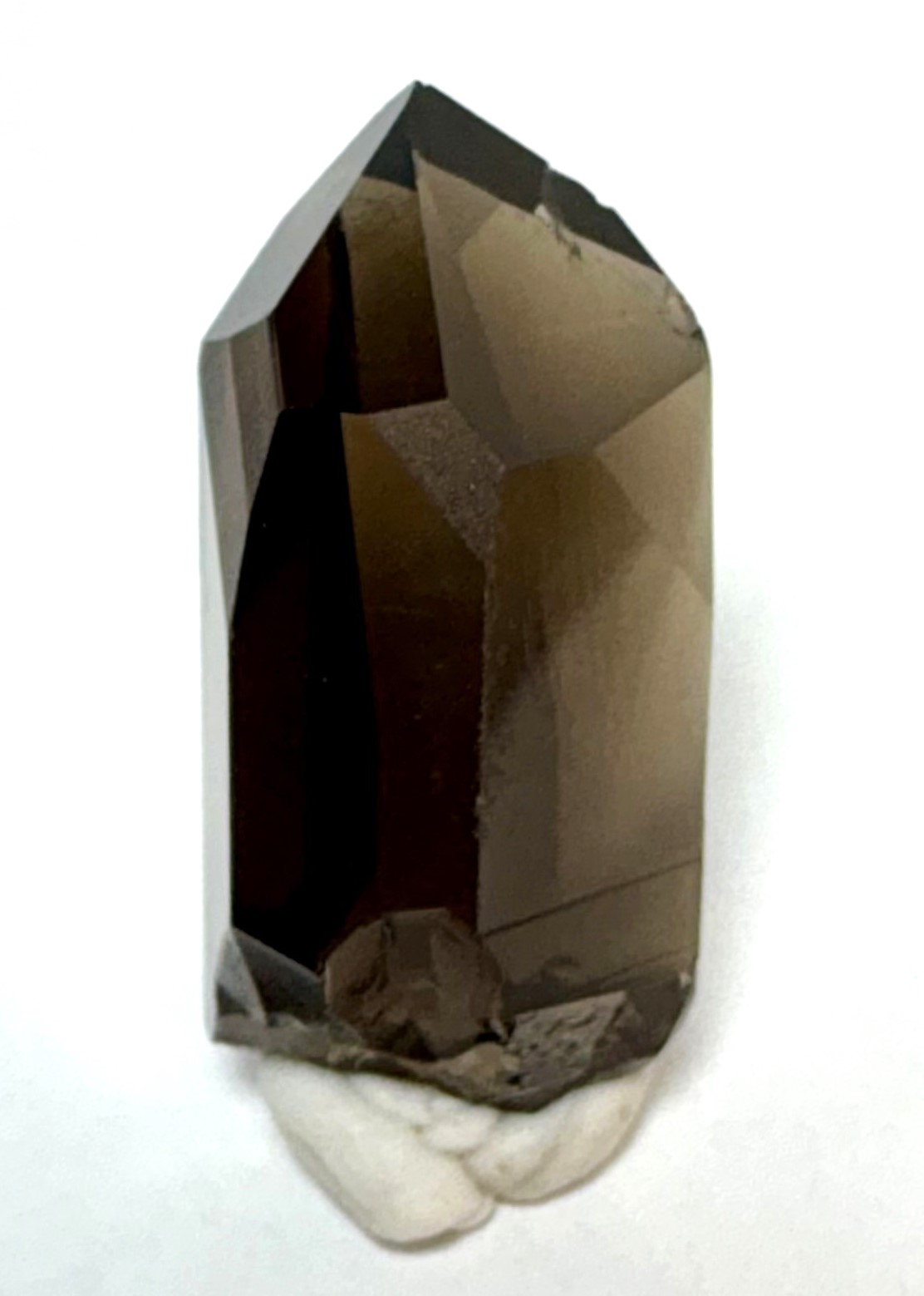
Compare this with a photo of a right handed Dauphine twin in my collection - it’s not as perfect as the model and diagram, but three successive trigonal trapezohedron faces are visible around the bottom of the termination, indicating Dauphine twinning.
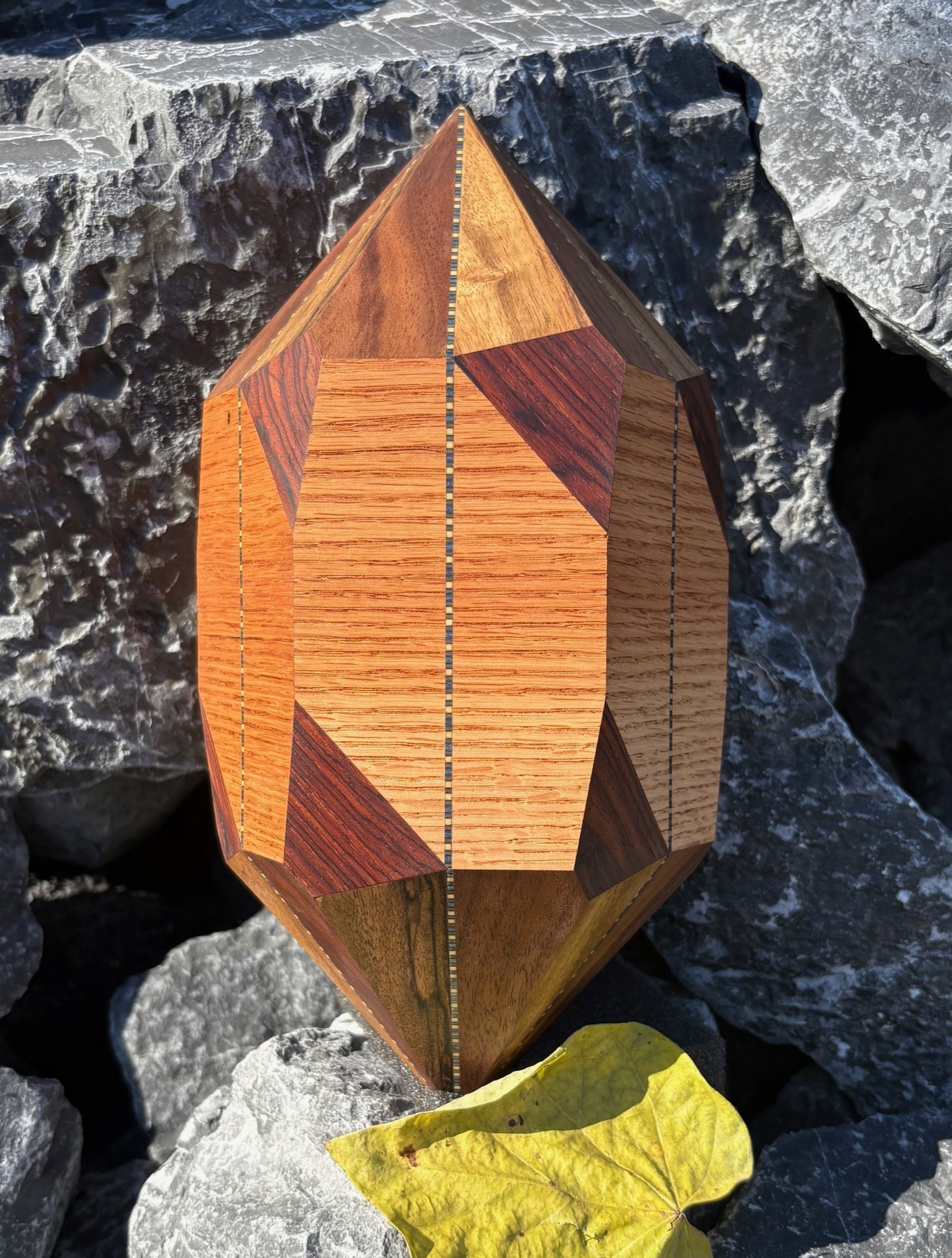
In addition to the Dauphine twin model of fig. 454 from Dana’s Textbook, I’ve also made a model of fig. 455, the Brazil twin. Both models are shown below, and you can read the post about Brazil twinning here.

To see regular, untwinned, right and left handed quartz models, click here.
Model details: 11" tip to tip. Prism faces are red oak, positive rhombohedron faces are English walnut, and negative rhombohedron faces are black walnut. Trigonal trapezohedron faces are cocobolo. Twin boundaries are indicated by an inlay of dotted line made from laminated dyed layers.
Specimen details: Quartz, right handed Dauphine twin. Uri, Switzerland. 2.8 cm long.