Pyrite - Pyritohedron
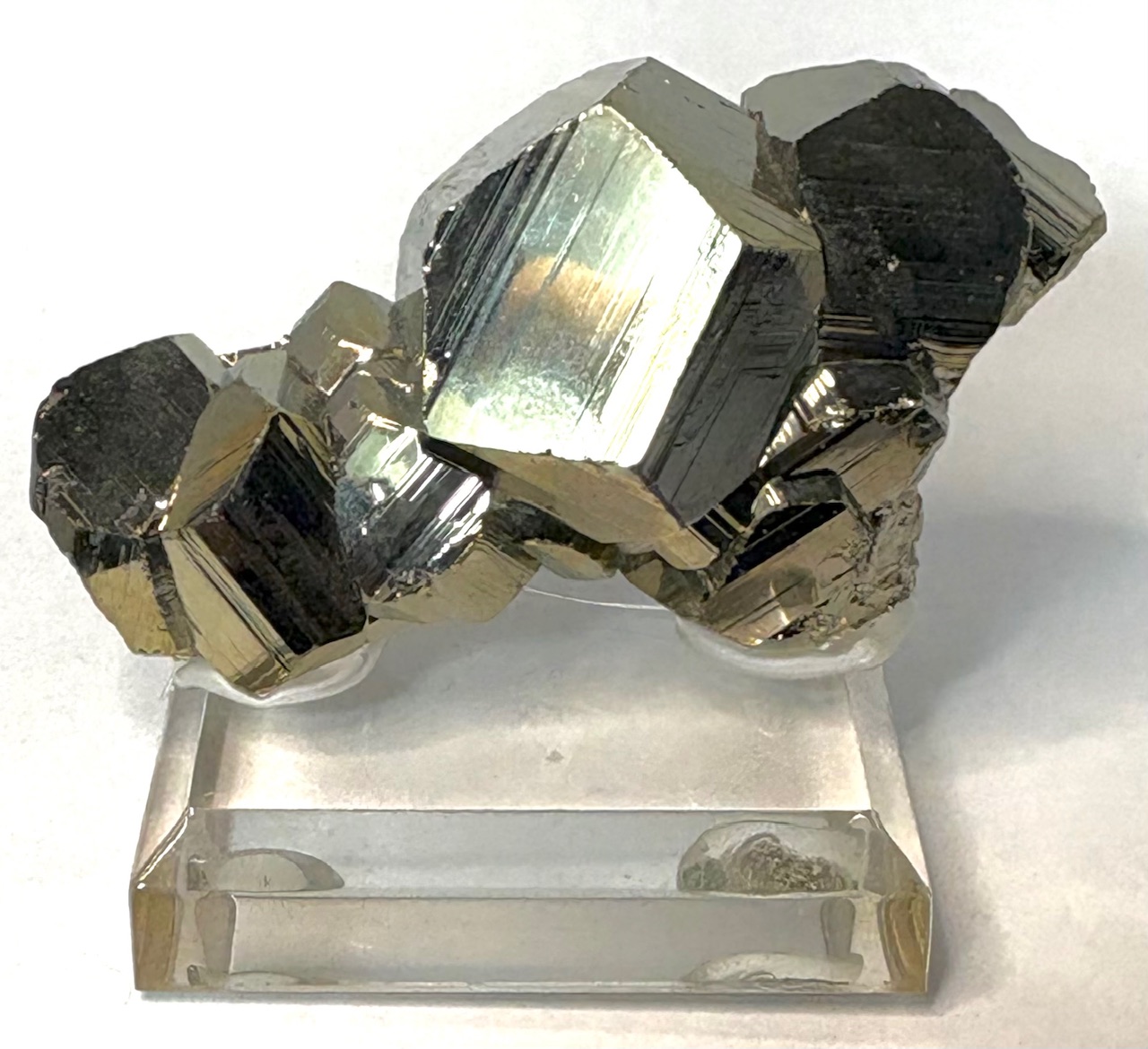
Based on a specimen from Huanzala, Peru
One of the first things you learn in a crystallography class is that one, two, three, four, and six-fold symmetries are all possible, but a true 5-fold axis of rotation is impossible in crystals. (Objections relating to quasicrystals are noted, but the structure of quasicrystals is not periodic as required by the strict definition of a crystal. I will write a post on quasicrystals if/when I get my hands on a specimen!) Some crystals, however, appear at first glance to have this forbidden symmetry, although a careful check of their interfacial angles will prove that they do not.
A good example of this is the pyritohedron, one of the most common forms of pyrite. A pyritohedron looks very similar to the pentagonal dodecahedron, a mathematical shape that is one of the Platonic solids. The pentagonal dodecahedron has 12 faces, all of which are regualar pentagons, and 5-fold rotational symmetry.
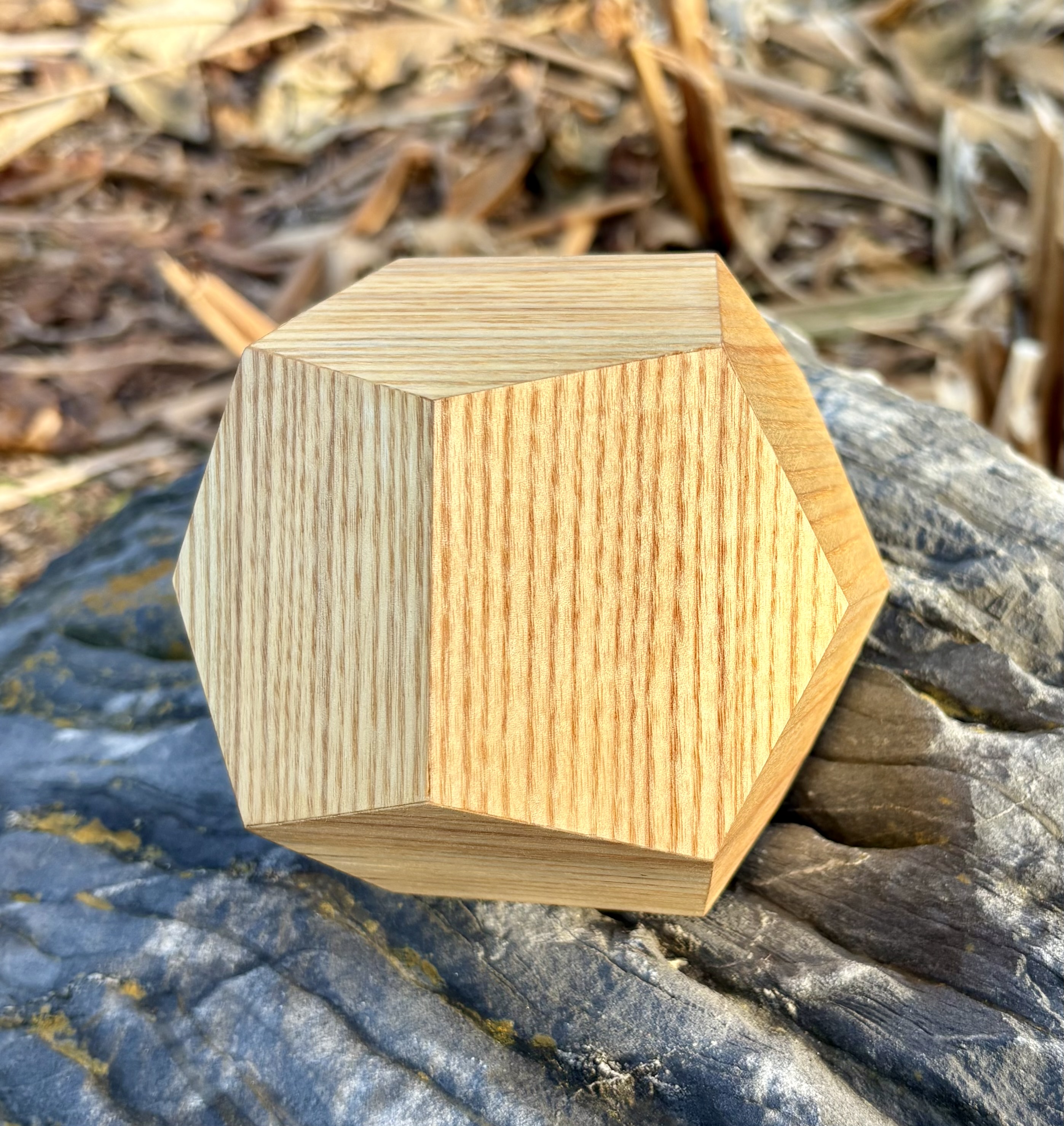
First, here’s a look at the pyritohedron crystal form. Below is the model I made of a pyritohedron next to a cluster of pyritohedral pyrite crystals.
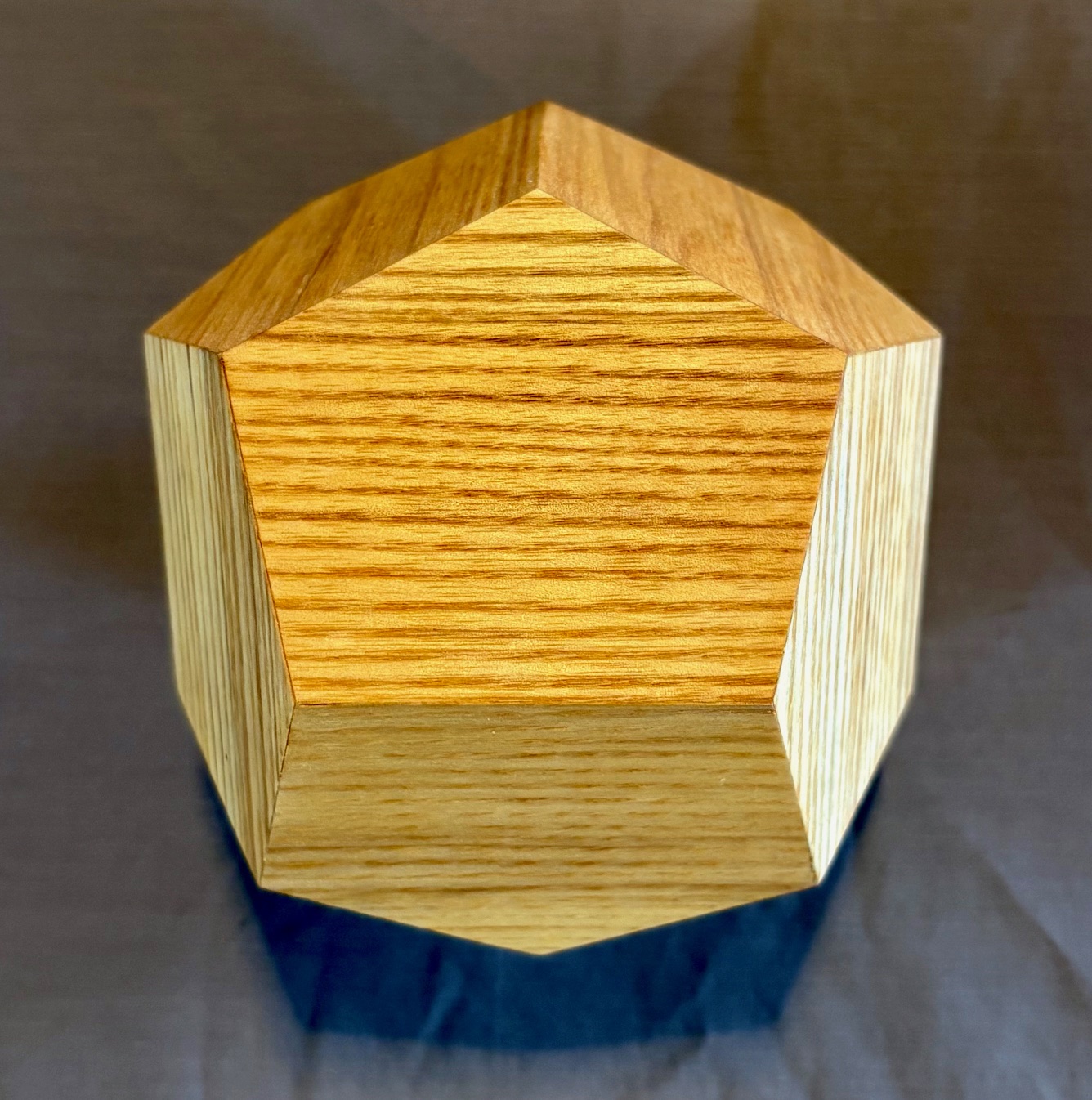
Next, here are a pair of photos comparing the pyritohedron to the pentagonal dodecahedron. Both are positioned with the camera looking straight down at a pentagonal face. A close look reveals that the faces of a pyritohedron are not regular pentagons, nor are the interfacial angles the same between the two shapes. The appearance of 5-fold symmetry is an illusion.
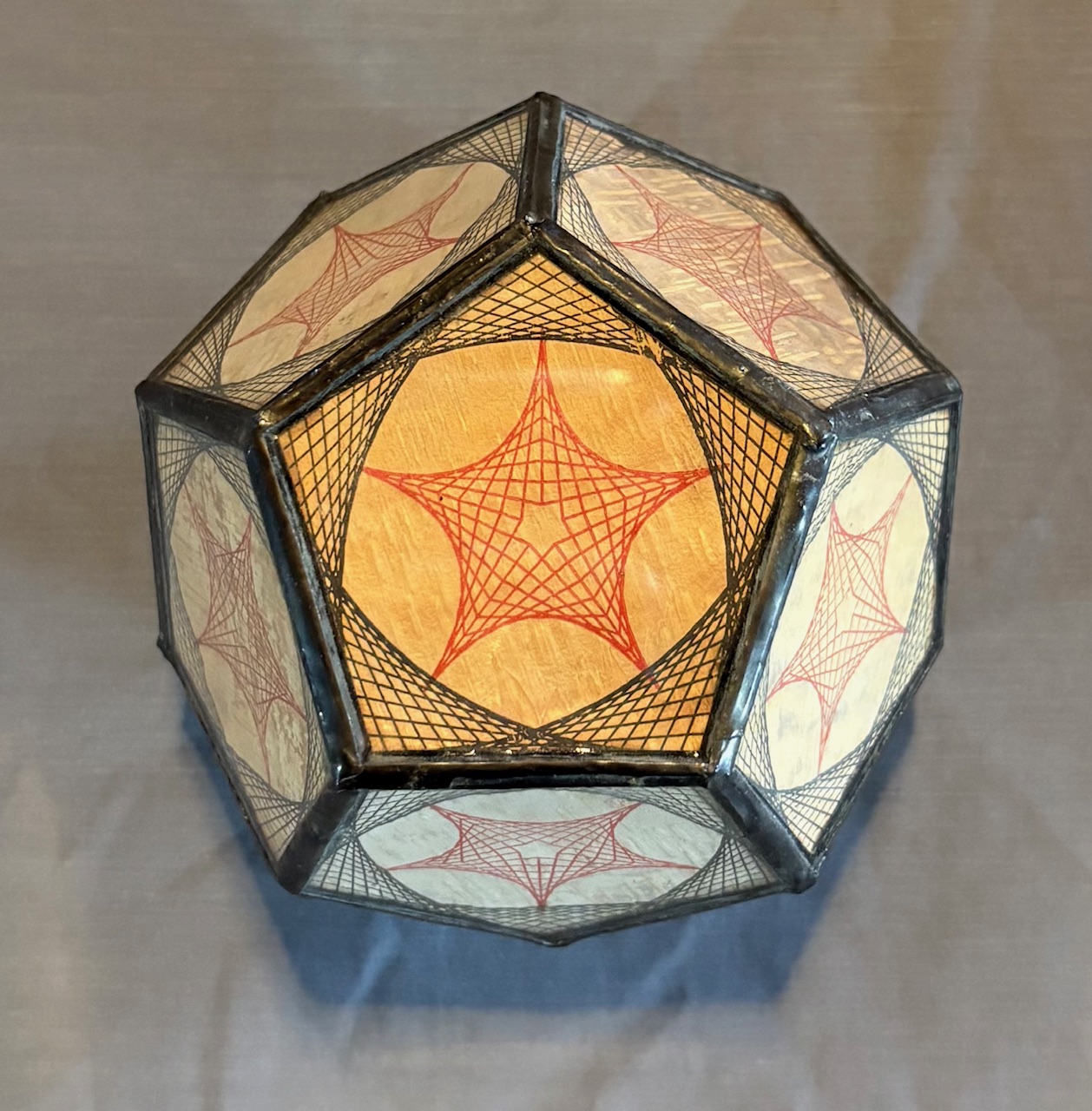
This is a very simple model with a complicated story behind it, but I think it’s worthwhile because of how common pyritohedra are. I have nice ones from 5 or 6 locations around the world, including right here in Lancaster County, PA where I live.
The model of the pentagonal dodecahedron pictured above is one I made before I took up woodworking. It’s glass with letterpress printed birch bark inside.
If you’re interested in more about the way pyrite crystals can mimic 5-fold symmetry without actually posessing it, see my post about the pseudoicosahedron.
To see a very cool shape that results from twinning of pyritohedra, see my post on the iron cross twin.
Model details: 4.5" across. Pyritohedron faces are ash.
Specimen details: Pyrite crystals with pyritohedral habit. Huanzala Mine, Huallanca Dist., Ancash Dept., Peru. 7.5 cm.