Quartz - Right and Left Handed
Based on a specimen from Uri, Switzerland
I have spent a lot of time over the years digging through bins of cheap quartz crystals looking for right and left handed examples. After a lot of searching, I have a number of each, but most of those crystals are only singly terminated, damaged, or without a location. When I started making models, I decided I was in the market for a better specimen, and happened across this beautiful left handed doubly terminated crystal with textbook form at a show a few years ago. The models shown below are based on this specimen.
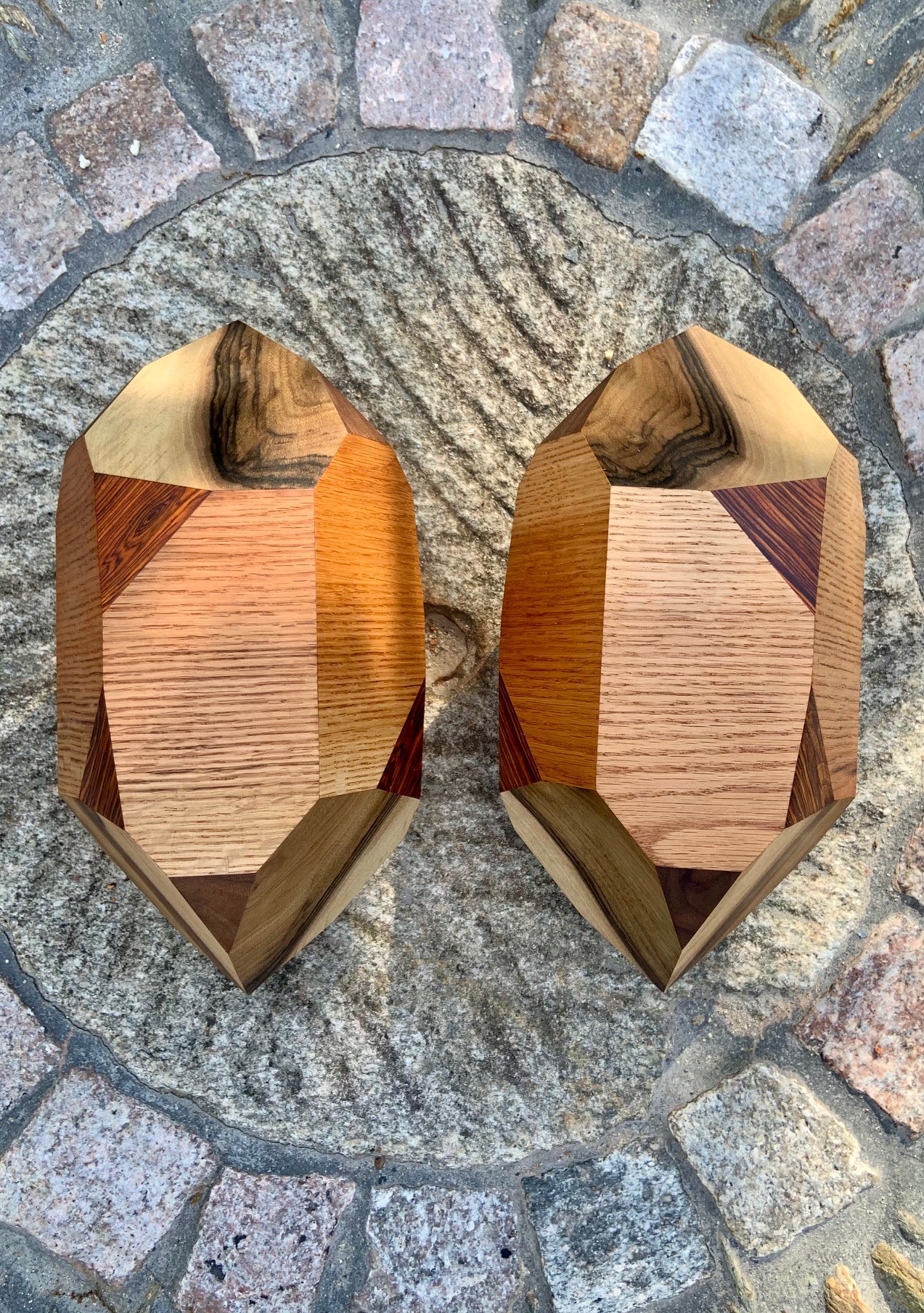
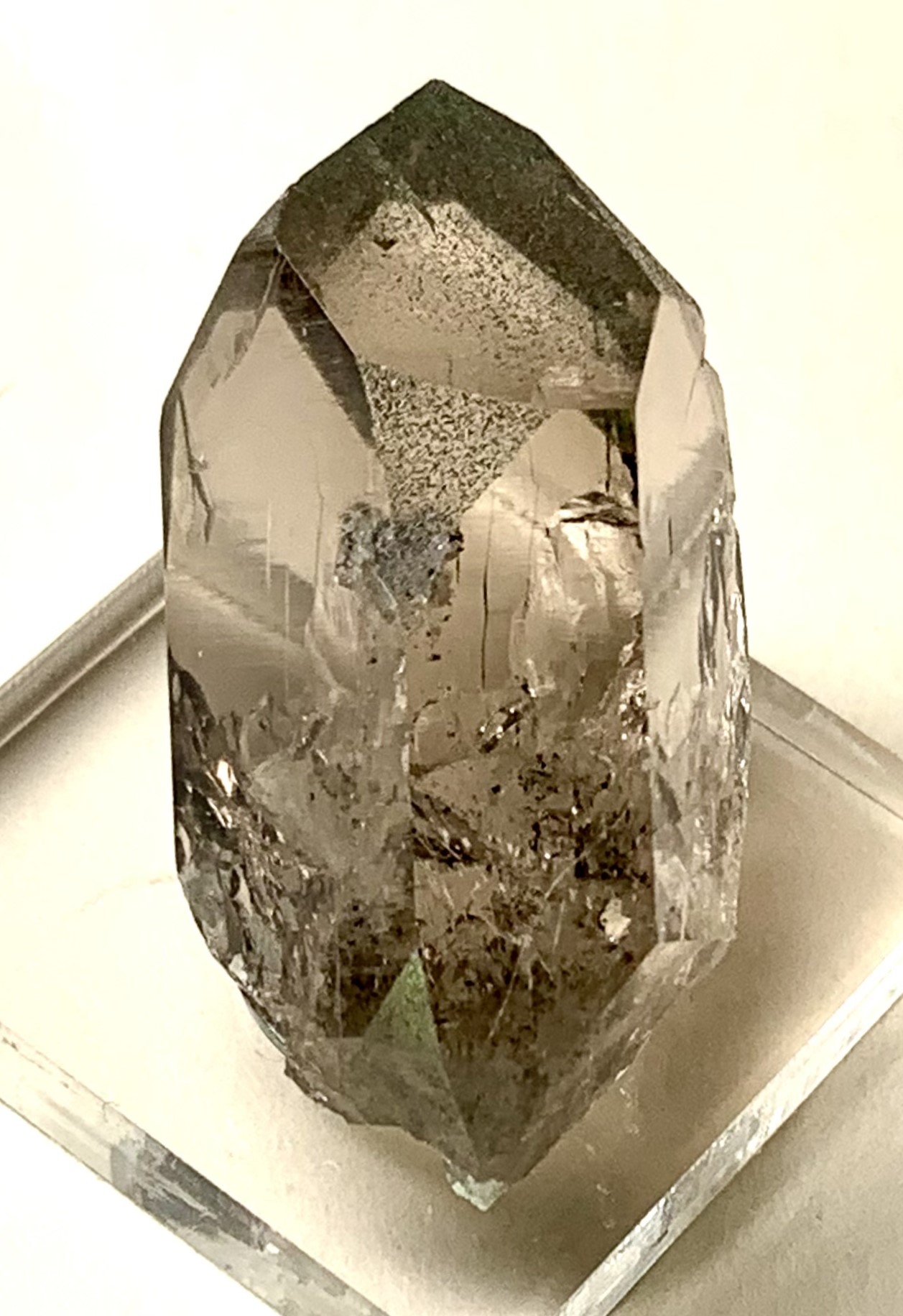
It’s the atomic structure of quartz that makes it right or left handed. The handedness of a quartz crystal’s internal structure affects the position of the faces of some of its possible forms, while having no visible effect on others. That means sometimes it’s possible to determine a quartz crystal’s handedness based on its external morphology, and sometimes not. If, for example, a trigonal trapezohedron is present, the way it is in the specimen shown, handedness can be determined easily.
I still dig through bins of cheap quartz crystals, although these days I’m looking for rarer forms or maybe evidence of twinning. Quartz does some really interesting things, and I hope to be able to illustrate some of them through wood models. See below for links to two kinds of twinned quartz, and stay tuned for more quartz models to come!
If you like quartz, be sure to have a look at my Brazil twin model and my Dauphine twin model. I hope to be adding a Japan law twin soon as well.
Model details: 12" tip to tip. Prism faces are red oak, positive rhombohedron faces are English walnut, and negative rhombohedron faces are black walnut. Trigonal trapezohedron faces are cocobolo.
Specimen details: Doubly terminated left handed quartz crystal. Uri, Switzerland. 4 cm long.