Spinel Pair
Based on specimens from Russia and Canada
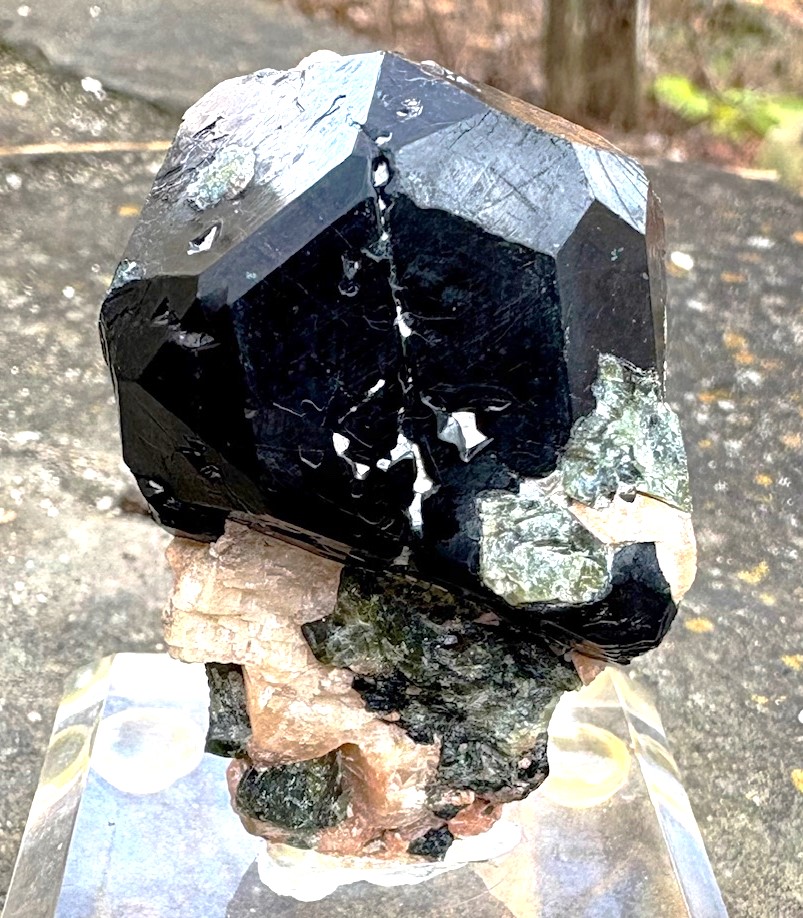
At the 2023 East Coast show in Springfield MA, I was delighted to find two complex spinel crystal specimens from two different dealers. One, from Siberia, was large, sharp, and highly symmetrical like something out of a textbook. The other, from Baffin Island, Canada, was a pleasing shade of dark blue but distorted in a way that made its jumble of faces difficult to sort out. I bought them both, but upon further investigation in my hotel room that evening I was disappointed to find that both crystals were bounded by the exact same forms! Although I was initially grumpy about the coincidence, I eventually realized that models of these crystals would make a very nice pair. The completed set makes the similarities between these two seemingly very different crystals readily apparent.
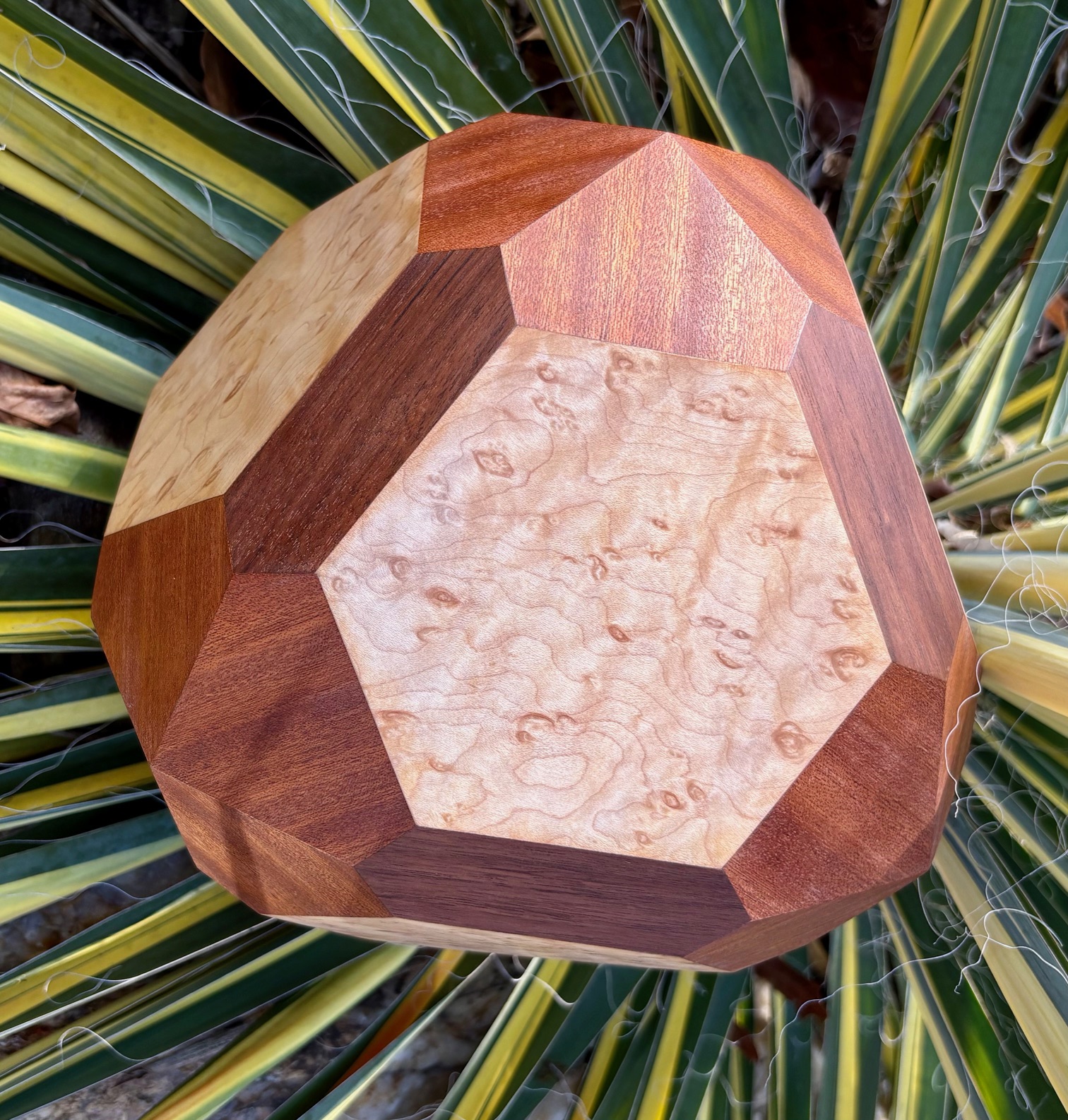
First, here is a photo of the spinel from Russia with the model I made in a similar orientation.
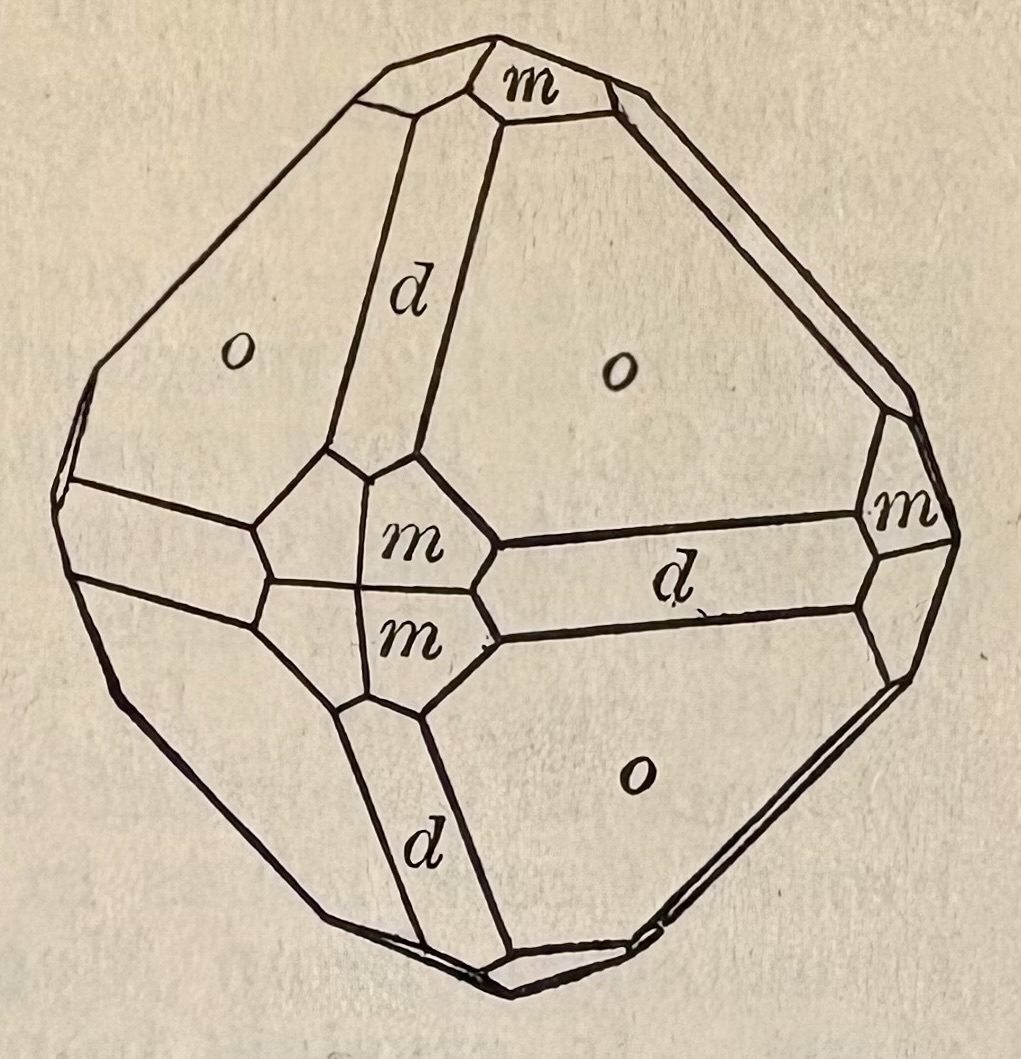
The best orientation to display this specimen happens not to correspond with the crystal’s symmetry axes, so here is another photo showing the crystal in a more traditional alignment. An image of a crystal drawing from Dana showing a combination of octahedral, dodecahedral, and trapezohedral forms matches pretty well.
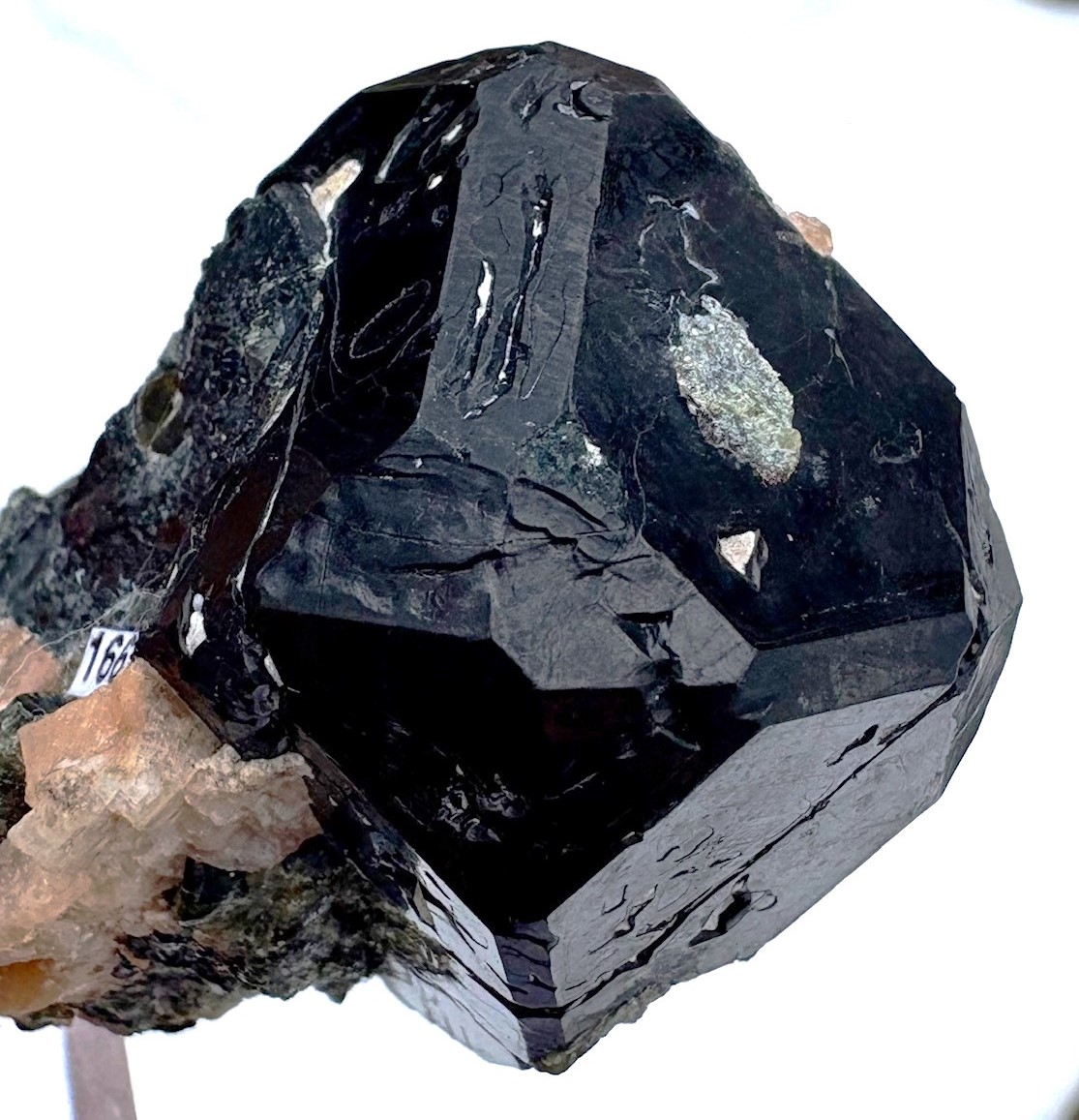
Next, here is a photo of the spinel crystal from Baffin Island, Canada, together with its model. The same three crystal forms occur again, and are represented by the same kinds of wood in the second model.
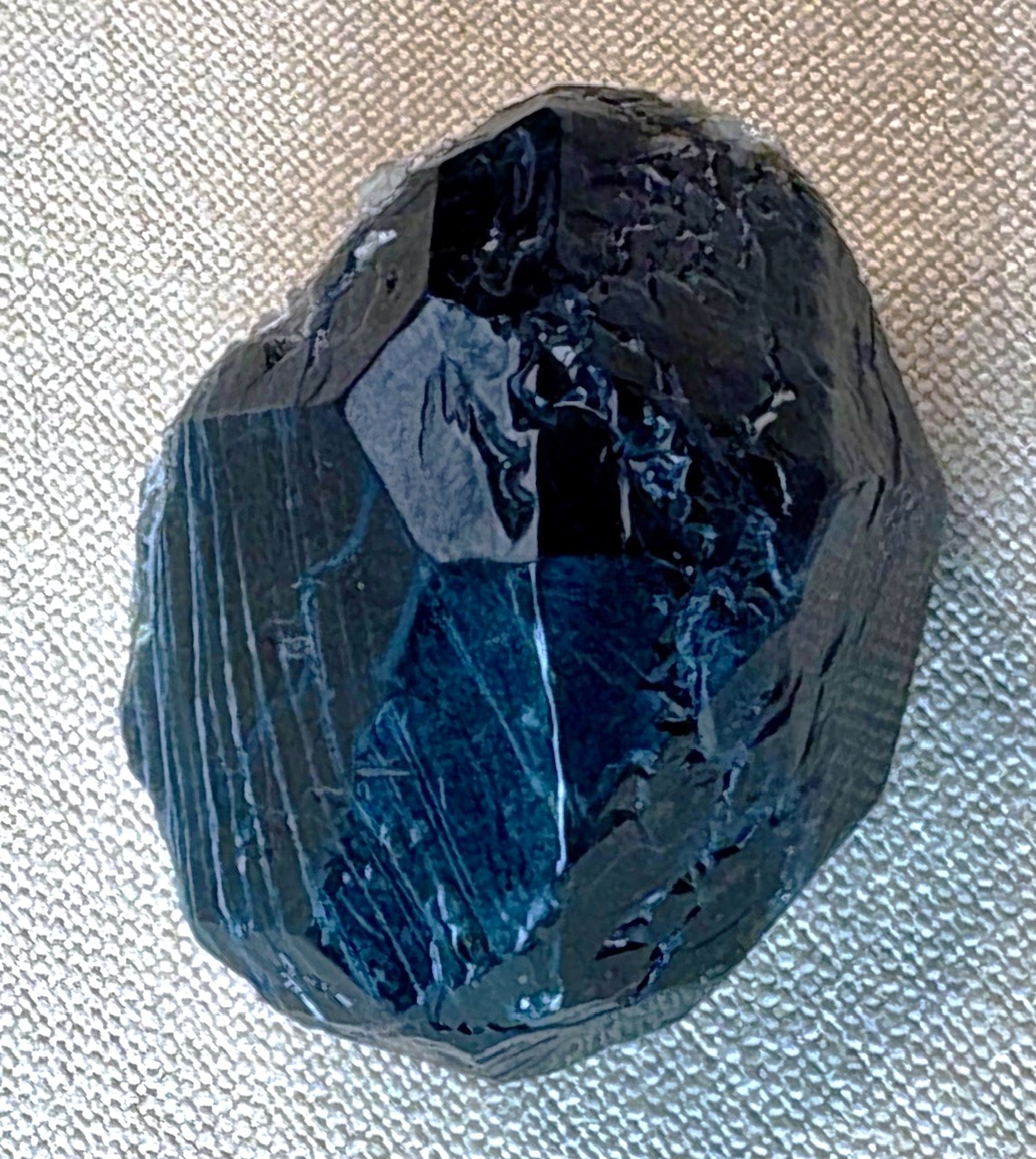
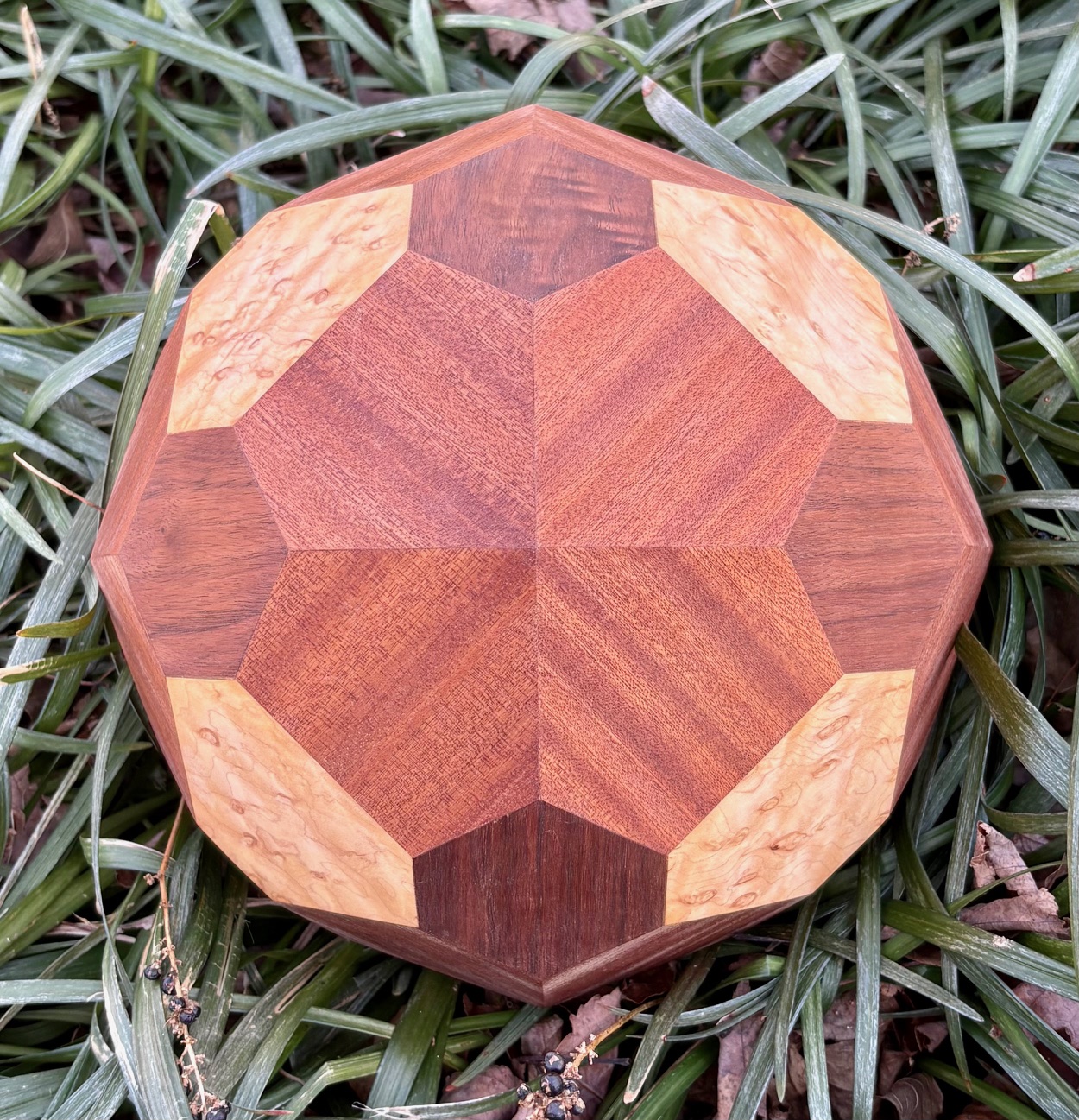
Unlike the spinel from Russia, this crystal is distorted and confusing to look at. The faces in the top left quadrant of the photo correspond pretty well with the sizes of faces in the model, but the sizes of other faces in the crystal vary quite a bit. The situation is not helped by the “melted” look of some parts of the crystal, which obscures some of the edges and makes the shapes of the faces harder to see. In planning the model, I ignored the distortions and did my best to present each crystal form at its average size. The wood model emphasizes the ideal symmetry of a perfect crystal, without trying to mimic the distortions of the actual specimen.
So even though the two crystals look quite different from each other at first glance, the two models reveal the similarities in their crystal forms. Here are both models shown looking down a fourfold axis.
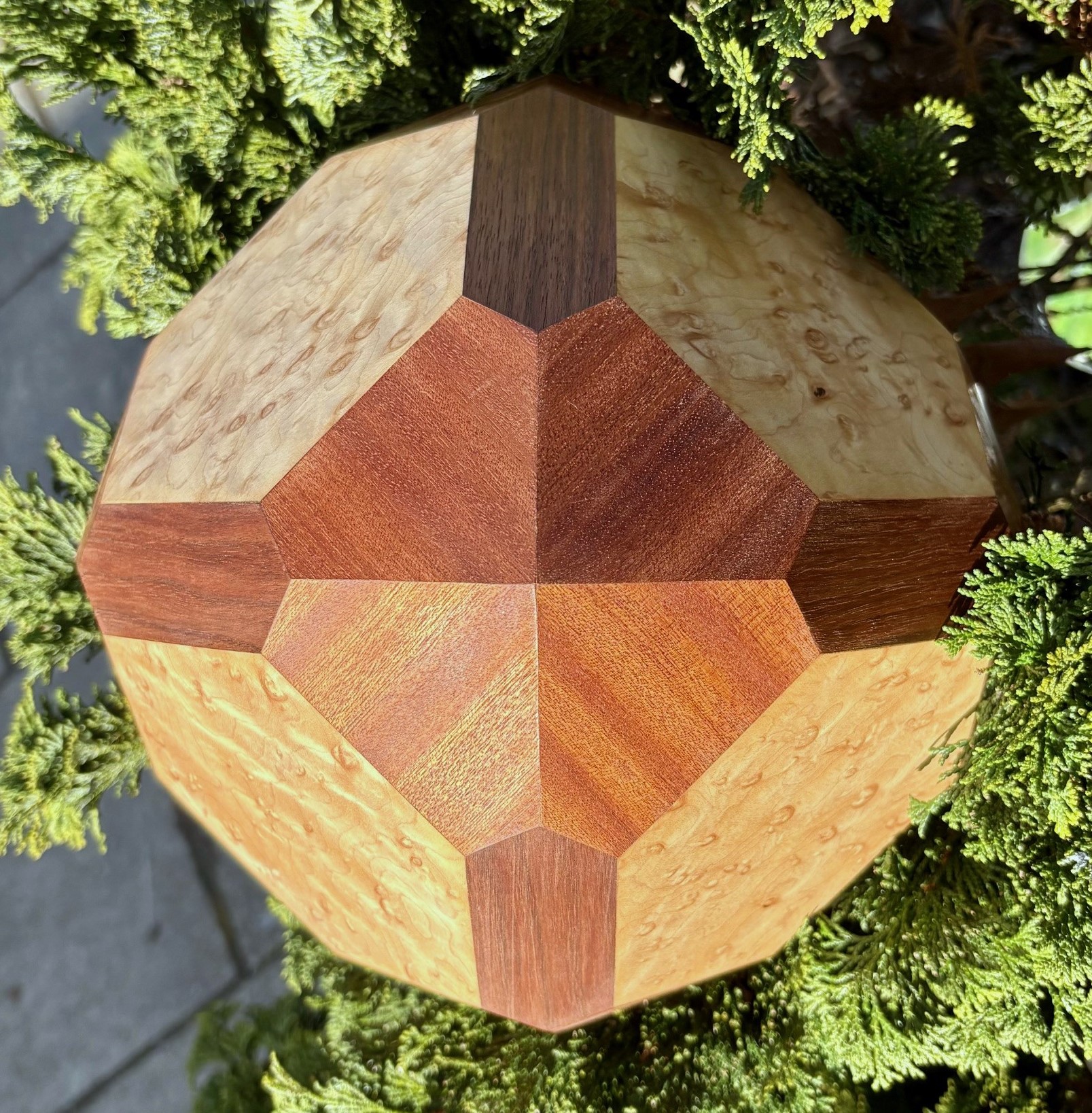
That’s what I love about crystal models. They can reduce distortions and imperfections, idealize symmetry, and clarify what’s important about a specimen, making it easier to appreciate its natural beauty.
Model details: Both models are 10" across. Octahedron faces are birdseye maple, dodecahedron faces are black walnut, and trapezohedron faces are sapele.
Specimen details: Spinel from Russia - Large black crystal on matrix, Slyudyanka, Irkutskaya Oblast, Siberia, Russia. Crystal is 4.5 cm across.
Spinel from Canada - Dark blue spinel crystal, MacDonald/Baffin Island, Qikiqtaaluk Region, Nunavut, Canada. 3 cm.